CATEGORIES
TAGS
How to Choose a Podcast for Product Insights Easily

More than 65 percent of American professionals now turn to podcasts for real-time industry updates and product insights. With so many voices in the podcast world, choosing the right shows and extracting genuine value can feel overwhelming. This step-by-step guide reveals how American listeners can transform casual listening into powerful market research, turning every episode into a strategic advantage.
Table of Contents
- Step 1: Define Your Product Discovery Goals
- Step 2: Analyze Trending Products And Categories
- Step 3: Compare Podcast Creators And Guest Expertise
- Step 4: Leverage Transcript Data For Hidden Insights
- Step 5: Verify Audience Engagement And Authenticity
Quick Summary
| Key Insight | Explanation |
|---|---|
| 1. Define Clear Goals | Establish specific objectives for product discovery to enhance your podcast research. Focus on measurable outcomes to gather valuable insights. |
| 2. Analyze Product Mentions | Systematically track how products are discussed across podcasts to identify trends. Create a log to analyze product details and host perceptions. |
| 3. Assess Creator Expertise | Evaluate the credentials of podcast hosts and guests to ensure credible insights. Look for verified expertise and authentic experiences shared. |
| 4. Utilize Transcript Analysis | Use transcripts to extract deeper insights about products. Search for contextual mentions and emotional tones that reveal customer sentiments. |
| 5. Verify Audience Engagement | Assess interaction dynamics in podcasts to gauge authenticity. Engaged audiences indicate credible insights while diverse opinions enhance reliability. |
Step 1: Define your product discovery goals
Defining clear product discovery goals transforms your podcast listening experience from passive entertainment to strategic market research. Your objectives will guide which podcasts you select and how deeply you analyze their content for valuable insights.
Start by getting specific about what you want to learn. Are you researching emerging trends in your industry? Looking for innovative product recommendations? Or tracking how successful entrepreneurs solve specific business challenges? Product discovery is a continuous process of learning about customer needs that requires intentional focus and strategic listening.
To crystallize your goals, ask yourself targeted questions. In technology, you might want to understand which AI tools successful founders are discussing. For fitness enthusiasts, you could track the most recommended workout equipment or nutritional supplements. Marketing professionals might focus on discovering cutting edge advertising strategies mentioned by industry leaders.
Pro tip: Transform vague goals into measurable outcomes. Instead of a generic “learn about products,” specify “identify three productivity tools recommended by top business podcasters in the last quarter” or “track mentions of sustainable fashion brands across lifestyle podcasts.” This precision helps you extract maximum value from your podcast research.
By establishing clear discovery goals, you create a targeted approach that turns podcast listening into a powerful market intelligence tool.
Step 2: Analyze trending products and categories
Discovering trending products through podcasts requires a strategic approach that goes beyond casual listening. Your goal is to extract actionable market intelligence by understanding which products are gaining momentum across different industries and audience segments.
Start by paying close attention to how podcast hosts and guests discuss specific products. Research on product design reveals that certain elements influence consumer perceptions of trendiness, so listen for passionate or repeated mentions that signal genuine enthusiasm. For example, in tech podcasts, look for recurring discussions about AI tools, productivity software, or innovative hardware. In fitness podcasts, track mentions of emerging workout equipment, nutritional supplements, or wellness technologies.

To systematically analyze product trends, create a tracking system. Consider creating a spreadsheet where you log product mentions, context, frequency, and the specific podcasts discussing them. Pay attention to not just what products are mentioned, but how they are described. Are hosts solving specific problems? Sharing personal experiences? Recommending tools that transformed their workflow? These nuanced details provide rich insights beyond simple product listings.
Pro tip: Diversify your podcast sources. Do not rely on a single podcast or industry vertical. Cross reference mentions across different shows to validate trends and understand broader market movements. A productivity tool mentioned in a business podcast might also appear in a technology or entrepreneurship show, indicating wider market relevance.
By developing a disciplined approach to podcast product analysis, you transform audio content into a powerful market research tool that reveals emerging trends before they become mainstream.
Step 3: Compare podcast creators and guest expertise
Comparing podcast creators and guests requires a nuanced approach that goes beyond surface level popularity. Your goal is to evaluate the depth, credibility, and genuine expertise of those sharing product insights.
Research on podcast guests reveals critical patterns in how expertise is demonstrated across different shows. Start by examining the professional background of podcast hosts and their frequent guests. Look for indicators of authentic expertise like direct industry experience, academic credentials, proven track records, or significant achievements in their respective fields. A tech podcast featuring founders who have actually built successful startups will offer more substantive insights than generalist commentators.
Pay close attention to how hosts and guests discuss products. Are they sharing personal experiences? Offering deep technical analysis? Providing nuanced perspectives that demonstrate genuine understanding? Authentic expertise goes beyond superficial product descriptions. Research suggests that influencers who reference personal experiences and close social ties can significantly enhance audience engagement and perceived credibility.
Pro tip: Cross reference guests credentials. Check their LinkedIn profiles, personal websites, or professional achievements. A guest mentioned as an industry expert should have verifiable credentials that match their podcast persona. Look for consistent messaging across different platforms that reinforces their claimed expertise.
By developing a critical lens for assessing podcast creators and guests, you transform podcast listening from passive consumption to strategic market intelligence gathering.
Step 4: Leverage transcript data for hidden insights
Transcript analysis transforms podcast listening from passive consumption to strategic market research. Your goal is to extract nuanced product insights that go beyond surface level discussions.
Podcast transcripts offer a sophisticated methodology for qualitative research, providing rich contextual information about product mentions and discussions. Start by searching transcripts for specific keywords related to your product discovery goals. Look for patterns in how products are discussed context of problems they solve, user experiences, and comparative language. Pay attention to emotional tone words that indicate genuine enthusiasm or skepticism about specific tools or technologies.
Develop a systematic approach to transcript review. Create a tracking system where you log product mentions, frequency of discussion, the specific context in which products are referenced, and any unique insights shared by hosts or guests. Look for recurring themes or breakthrough moments where guests share unexpected perspectives about products or technologies. Advanced listeners will notice subtle signals like the depth of technical explanation, personal anecdotes, or comparative discussions that reveal true product value.

Pro tip: Be vigilant about potential misinformation. Podcast transcripts can sometimes contain unverified claims or biased perspectives. Cross reference significant product claims with multiple sources and look for concrete evidence or measurable outcomes when evaluating product recommendations.
By treating podcast transcripts as valuable data sources, you transform audio content into a strategic intelligence tool that reveals market trends before they become mainstream.
Step 5: Verify audience engagement and authenticity
Authenticity and audience engagement are critical signals that reveal the true value of a podcast for product insights. Your goal is to identify shows where listeners are deeply connected and actively participating in discussions.
Research reveals multiple factors that drive podcast user engagement, including content quality, host skills, and audience interaction dynamics. Start by examining comment sections, social media discussions, and listener reviews. Look for podcasts where listeners share detailed experiences, ask thoughtful questions, and demonstrate genuine excitement about the topics and products discussed. Podcasts with high comment volumes and substantive interactions signal an engaged and credible audience.
Pay attention to the relationship between hosts and listeners. Advanced podcast researchers understand that authenticity emerges through spontaneous conversations, personal stories, and genuine product experiences. Notice how hosts discuss products technical details, share real world applications, and respond to audience feedback. Are they transparent about potential limitations? Do they provide balanced perspectives? Authentic podcasts create a sense of trust where listeners feel like they are part of a conversation rather than being marketed to.
Pro tip: Be skeptical of podcasts with suspiciously uniform or overly positive feedback. Genuine audience engagement includes constructive criticism, nuanced perspectives, and a range of listener experiences. A podcast ecosystem with diverse listener viewpoints indicates a more reliable source of product insights.
By developing a critical approach to evaluating podcast authenticity, you transform your research from passive listening to strategic market intelligence gathering.
Discover Product Insights from Podcasts Faster with Prodcast
Choosing the right podcasts for product discovery is a complex challenge that requires careful goal setting and in-depth analysis of creators, guests, and transcript data. If you struggle to track trending products, evaluate expert credibility, or verify audience engagement across numerous shows, you are not alone. The key pain points highlighted include sifting through scattered audio content, identifying authentic product mentions, and turning passive listening into actionable insights.
Prodcast solves these problems by transforming thousands of podcast transcripts into structured, searchable data. With Prodcast, you can quickly uncover which products and brands are trending in real time across industries such as technology, fitness, and business. It lets you tap into exactly the insights discussed in the article like expert mentions, unique discussion contexts, and nuanced sentiment around products.
Learn how to turn your podcast listening into strategic product research by exploring Prodcast’s AI-powered platform that reveals hidden trends.
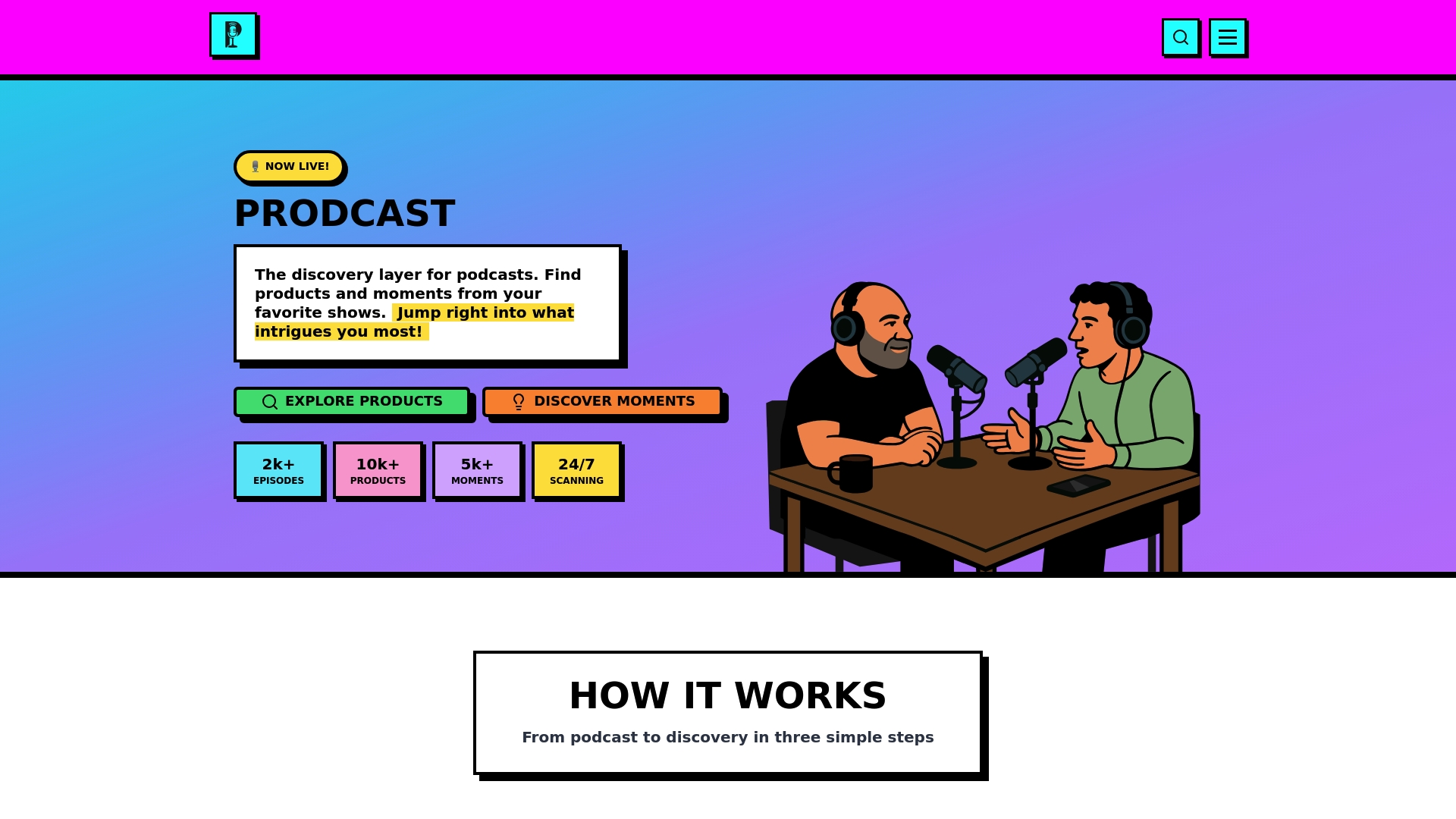
Jumpstart your product discovery with real data from authentic conversations on podcasts. Visit Prodcast today to unlock immediate access to market intelligence and make smarter decisions about the products you want to explore or promote.
Frequently Asked Questions
How can I define my product discovery goals for podcast listening?
To define your product discovery goals, start by identifying what you want to learn, such as emerging trends or specific product recommendations. Create measurable goals, like “identify three productivity tools mentioned in the last month,” to focus your listening and analysis.
What should I look for in trending products during podcast analysis?
When analyzing trends, pay attention to recurring mentions and the depth of discussions around specific products. Log product references, context, and frequency to identify which products are gaining traction across different podcasts.
How can I evaluate the expertise of podcast hosts and guests?
Evaluate the expertise of podcast hosts and guests by reviewing their professional backgrounds and examining how they discuss products. Look for indicators of authentic expertise, such as industry experience and detailed product analysis that provide genuine insights.
How do I effectively use podcast transcripts for insights?
Utilize podcast transcripts by searching for relevant keywords related to your product discovery goals. Log product mentions and context to uncover nuanced insights that can inform your understanding of market trends.
What signs indicate strong audience engagement with a podcast?
Strong audience engagement is signaled by detailed listener comments, thoughtful social media discussions, and high volumes of interaction. Look for podcasts where listeners express a genuine connection and share diverse perspectives, indicating credibility and trustworthiness.
How can I ensure the authenticity of a podcast’s content?
To ensure authenticity, assess the relationship between hosts and listeners by observing how transparently they discuss products. Be cautious of overly positive feedback and seek podcasts that present balanced views and include constructive criticism from listeners.
Recommended
- Data-Driven Marketing Strategy for Podcast Product Discovery | Prodcast
- How to Choose Podcasts: A Guide for Listeners & Shoppers … | Prodcast
- Grow Podcast Audience Using Data-Driven Insights | Prodcast
- Grow Podcast Audience Using Data-Driven Insights | Prodcast
- Hair Care Apps Comparison – Discover 6 Top Picks for 2025 | MyHair