CATEGORIES
TAGS
Marketing for Podcasts: Drive Real-World Product Discovery

Over 70% of American marketers say podcasts are reshaping how they discover new products and connect with their audiences. In an era where conversations drive buying decisions, knowing how to gather and analyze podcast data is essential for staying ahead. This step by step guide will show you how to capture real podcast insights, spot trending products, and deliver recommendations that truly resonate with the American audience.
Table of Contents
- Step 1: Set Up Podcast Data Collection Tools
- Step 2: Identify Trending Products And Key Discussions
- Step 3: Craft Data-Driven Product Marketing Campaigns
- Step 4: Engage Audiences With Targeted Recommendations
- Step 5: Measure Campaign Results And Optimize Strategies
Quick Summary
| Main Insight | Detailed Explanation |
|---|---|
| 1. Utilize podcast data tools effectively | Invest in tools that offer transcription, sentiment analysis, and metadata tracking to extract valuable insights from podcast content. |
| 2. Identify key product trends | Focus on consistent product mentions and expert recommendations to understand emerging consumer interests in podcasts. |
| 3. Create data-driven marketing campaigns | Tailor marketing approaches based on podcast insights, using audience segmentation that reflects genuine conversations and preferences. |
| 4. Personalize audience recommendations | Develop thoughtful recommendation strategies that balance familiar suggestions with new content, enhancing listener engagement and discovery. |
| 5. Measure and optimize marketing effectiveness | Continuously analyze detailed performance metrics to improve marketing strategies and create more personalized and impactful podcast recommendations. |
Step 1: Set up podcast data collection tools
Setting up podcast data collection tools allows you to transform raw audio conversations into actionable marketing insights. By strategically implementing the right technologies, you can capture valuable product mentions and listener trends across diverse podcast channels.
Begin by exploring comprehensive podcast research platforms. The Structured Podcast Research Corpus provides an impressive dataset of over 1.1 million podcast transcripts, which can serve as a foundational resource for understanding podcast analytics. When selecting your data collection tools, prioritize platforms that offer detailed transcript analysis, speaker metadata tracking, and comprehensive audio feature extraction.
Your ideal podcast data collection toolkit should include transcription services, sentiment analysis software, and metadata tracking systems. Look for solutions that can automatically tag product mentions, track speaker credibility, and generate detailed listener demographic reports. Pro tip: Choose tools that integrate seamlessly with your existing marketing technology stack to minimize manual data transfer and maximize efficiency.
As you implement these data collection strategies, remember that the goal is not just gathering information but transforming raw podcast conversations into strategic marketing intelligence that drives real world product discovery.
Step 2: Identify trending products and key discussions
Identifying trending products and key discussions within podcasts transforms raw audio content into valuable marketing intelligence. The goal is to uncover the most talked about brands, tools, and recommendations that are driving consumer interest across different podcast genres.

Start by leveraging podcast personalization research that demonstrates how listening patterns can reveal critical insights. This research shows that targeted recommendation systems can increase podcast streams by nearly 29%, providing a window into audience preferences and emerging product trends. When analyzing podcast content, focus on extracting mentions of specific products, recurring themes, and expert recommendations that appear consistently across multiple episodes.
To effectively track trending products, develop a systematic approach that combines automated transcript analysis with manual review. Look for patterns such as repeated brand mentions, enthusiastic product endorsements, and context around why specific tools or services are recommended. Pay special attention to niche discussions where influencers and industry experts share genuine insights about products they actually use. A detailed podcast summarization approach can help you navigate the conversational nature of podcast content and extract meaningful product information more accurately.
By implementing these strategies, you will transform podcast conversations into a powerful discovery engine for emerging product trends and consumer preferences.
Step 3: Craft data-driven product marketing campaigns
Crafting data-driven product marketing campaigns transforms podcast insights into strategic promotional opportunities. Your goal is to develop targeted marketing approaches that resonate directly with the specific audience segments and product interests revealed through podcast analysis.
Begin by understanding how mathematical models can transform market data into actionable marketing strategies. These analytical frameworks help reduce uncertainty and pinpoint precise consumer preferences emerging from podcast discussions. When developing your campaign, segment your audience based on the podcast genres where product mentions are most frequent, and align your messaging with the authentic language and context used by podcast hosts and guests.
Implement a comprehensive approach by integrating unified data platforms that consolidate podcast transcript insights with broader market research. This method allows you to cross-reference product mentions with demographic information, listening habits, and consumer sentiment. Pro tip: Create campaign messaging that mirrors the conversational tone and genuine recommendations heard in podcast discussions rather than using generic promotional language. By maintaining authenticity and directly addressing the specific needs and interests revealed through podcast data, you can develop marketing campaigns that feel more like trusted recommendations than traditional advertisements.
The ultimate objective is to transform podcast conversations into precisely targeted marketing narratives that feel personal and compelling to your potential customers.
Step 4: Engage audiences with targeted recommendations
Engaging audiences with targeted recommendations transforms podcast listening from a passive experience into an interactive discovery journey. Your primary objective is to create personalized recommendation strategies that feel authentic and genuinely helpful to your audience.
Understand the nuanced landscape of recommendation systems by examining personalized podcast recommendation research. This study revealed that while personalized recommendations can increase podcast streams by nearly 29%, they also risk reducing content diversity. The key is to balance targeted suggestions with an element of unexpected discovery that keeps listeners curious and engaged. Develop recommendation algorithms that not only reflect listeners past preferences but also introduce them to new content that expands their intellectual horizons.
Implement a sophisticated recommendation approach that goes beyond simple algorithmic matching. Podcast content analysis techniques demonstrate the importance of understanding the contextual nuances of spoken content. This means creating recommendations that capture the genuine spirit of podcast conversations rather than relying on surface level metadata. Pro tip: Design recommendation systems that highlight the human element stories behind product mentions expert insights and compelling narratives. By focusing on the context and emotional resonance of podcast content you can create recommendations that feel like trusted suggestions from a knowledgeable friend.
The ultimate goal is to transform podcast recommendations from generic suggestions into personalized journeys of discovery that feel tailored to each individual listeners interests and aspirations.
Step 5: Measure campaign results and optimize strategies
Measuring campaign results and optimizing strategies is crucial for transforming podcast marketing insights into tangible business growth. Your goal is to develop a systematic approach that tracks performance and continuously refines your marketing approach based on real audience data.
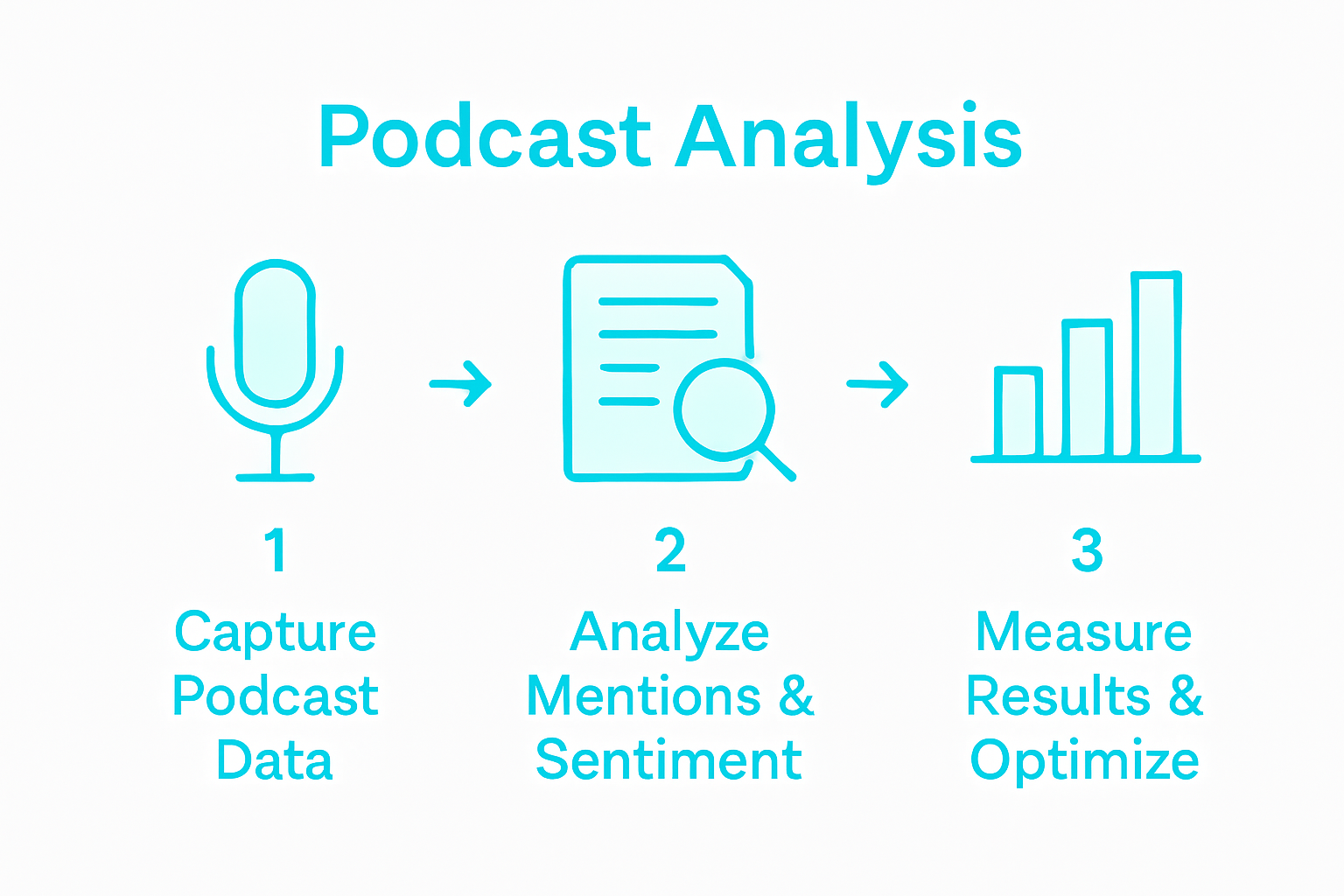
Begin by implementing comprehensive podcast content analysis methodologies that go beyond surface level metrics. These sophisticated frameworks help you understand not just how many people listened, but the deeper nuances of audience engagement, content resonance, and potential product discovery paths. Look for metrics that reveal listener behavior patterns, such as how long people listen, which segments they replay, and how product mentions translate into actual consumer interest.
Leverage advanced download and audience tracking technologies that provide industry standard compliant data insights. Pro tip: Focus on metrics that demonstrate genuine listener interaction rather than vanity numbers. Track conversion rates, listener sentiment, and the specific moments within podcast episodes where product interests spike. By continuously analyzing these detailed performance indicators, you can iteratively refine your marketing strategies to create more targeted and compelling podcast recommendations.
The ultimate objective is to transform raw data into actionable insights that help you understand your audience more deeply and create marketing campaigns that feel like personalized conversations rather than generic advertisements.
Unlock the Power of Podcast-Driven Product Discovery with Prodcast
The article highlights the challenge marketers face in capturing real-time product mentions and consumer insights from podcast conversations. Understanding trending products and crafting data-driven campaigns can be difficult without precise tools that analyze rich spoken-word content. Key goals include transforming raw podcast data into actionable marketing intelligence and engaging audiences with authentic, targeted recommendations.
Prodcast is designed specifically to solve these challenges by leveraging AI to analyze podcast transcripts, spotlighting which products and brands are making waves across thousands of shows. With features that identify expert insights, track emerging trends like the “most mentioned supplements on health podcasts” or “top AI tools in tech shows,” and reveal listener preferences, Prodcast empowers marketers and listeners alike to connect with authentic, data-driven stories. This platform bridges the gap between audio content and commerce, helping you create marketing campaigns that feel personal and resonate deeply.
Experience how your marketing can evolve with accurate product discovery by visiting Prodcast.
Discover the true potential of podcast marketing insights.
Ready to transform podcast conversations into real-world growth? Visit Prodcast today to start uncovering the product trends your audience really cares about and craft campaigns that deliver results.
Frequently Asked Questions
How can I set up podcast data collection tools to improve marketing?
Setting up podcast data collection tools starts with selecting comprehensive platforms that provide transcript analysis and metadata tracking. Ensure your toolkit includes transcription services and sentiment analysis software to transform your audio data into actionable insights within 30 days.
What strategies can I use to identify trending products in podcasts?
To identify trending products, begin by analyzing automated transcripts for repeated brand mentions and expert recommendations. Combine this data with a manual review to extract key themes, ensuring you’re tracking consumer interest accurately within the first few analysis cycles.
How do I craft data-driven marketing campaigns based on podcast insights?
Craft data-driven marketing campaigns by segmenting your audience based on podcast genres and aligning your messaging with the language used in discussions. This will help create targeted approaches that resonate with your audience, enhancing engagement within your next campaign rollout.
What are effective methods to engage audiences with personalized recommendations?
Engage audiences by developing recommendation algorithms that reflect their listening habits while introducing them to new content. Aim to balance targeted suggestions with elements of surprise to keep listeners curious and engaged, ideally within each content release.
How can I measure the effectiveness of my podcast marketing campaigns?
Measure the effectiveness of your podcast marketing campaigns by tracking metrics such as listener engagement, conversion rates, and specific moments of interest from episodes. Focus on gathering actionable insights to refine your strategies and enhance audience connection continually.
What types of data should I analyze to optimize my podcast marketing strategies?
Analyze metrics that reveal deeper audience engagement, such as listening duration, replayed segments, and general listener sentiment. This data will help optimize your marketing strategies by ensuring your campaigns are tailored to real audience preferences, aiming for continuous improvement.