CATEGORIES
TAGS
Podcast ROI: Turning Conversation Into Commerce

Most advice about podcast Return on Investment leaves American creators chasing the wrong metrics. While many focus solely on direct sales, the real power of podcasting goes much deeper. Over 60 percent of successful podcasts generate more value from brand trust and long-term audience growth than from instant product sales. Understanding these hidden benefits helps you capture real impact and make smarter decisions in a crowded audio market.
Table of Contents
- Podcast ROI Defined And Common Misconceptions
- Types Of Podcast ROI: Direct Vs. Indirect
- Analyzing Product Mentions And Consumer Trends
- Measuring Impact: Engagement, Sales, And Awareness
- Maximizing Podcast ROI With Data Insights
Key Takeaways
| Point | Details |
|---|---|
| Understanding Podcast ROI | Podcast ROI includes both direct financial outcomes and indirect value streams such as brand awareness and audience trust. |
| Measurement Complexity | Effective tracking of podcast ROI requires advanced methodologies that capture audience engagement and conversion paths. |
| Integration of Data Insights | Utilizing sophisticated analytics enables podcasters to align content strategies with audience preferences, optimizing both engagement and revenue. |
| Value of Audience Connection | Long-term relationships with listeners are crucial for maximizing ROI, emphasizing the need for strategic content connection over immediate sales. |
Podcast ROI Defined and Common Misconceptions
Podcast Return on Investment (ROI) represents the critical measurement of financial and strategic value generated through podcast content and audience engagement. Unlike traditional marketing metrics, podcast ROI involves complex, multifaceted evaluation that goes beyond simple monetary calculations. Podcast advertising effectiveness requires understanding nuanced audience interactions and conversion pathways.
Most podcasters mistakenly believe ROI is solely about direct product sales, but the reality is far more sophisticated. ROI encompasses multiple value streams including brand awareness, audience trust, strategic partnerships, and long-term listener relationship development. These indirect returns often generate more substantial value than immediate transactional outcomes. Podcast Advertising ROI research suggests that comprehensive tracking requires advanced multi-touch attribution models that capture listener journey complexity.
Common misconceptions about podcast ROI include oversimplifying measurement and neglecting qualitative impacts. Successful podcasters recognize that true value emerges through strategic audience connection rather than short-term metrics. Key measurement approaches involve tracking listener engagement, content sharing patterns, audience demographic insights, and cross-platform influence. By developing robust podcast analytics frameworks, creators can transform conversations into measurable commercial opportunities that extend far beyond traditional advertising models.
The most effective podcast ROI strategies integrate multiple data points:- Listener retention rates- Audience demographic insights- Cross-platform engagement metrics- Conversion tracking across different channels- Long-term brand relationship developmentUnderstanding these interconnected elements allows podcast creators to move beyond simplistic ROI calculations and develop more nuanced, strategically valuable content experiences.
Types of Podcast ROI: Direct vs. Indirect
Podcast Return on Investment (ROI) encompasses a nuanced spectrum of value creation that extends far beyond traditional financial metrics. Direct podcast ROI represents tangible, immediately measurable financial outcomes that can be directly attributed to podcast content and audience engagement. Podcast sponsorship strategies reveal multiple direct revenue channels including sponsored content, affiliate marketing, and merchandise sales that provide clear monetary returns.
Indirect podcast ROI represents more subtle but equally significant value streams that build long-term brand equity and strategic opportunities. These less quantifiable returns include enhanced audience credibility, strategic networking possibilities, and expanded professional influence. Research indicates that indirect ROI often generates more substantial long-term value by creating deep audience connections and positioning creators as thought leaders within their respective domains. Podcast engagement metrics demonstrate how these intangible returns translate into meaningful audience relationships.
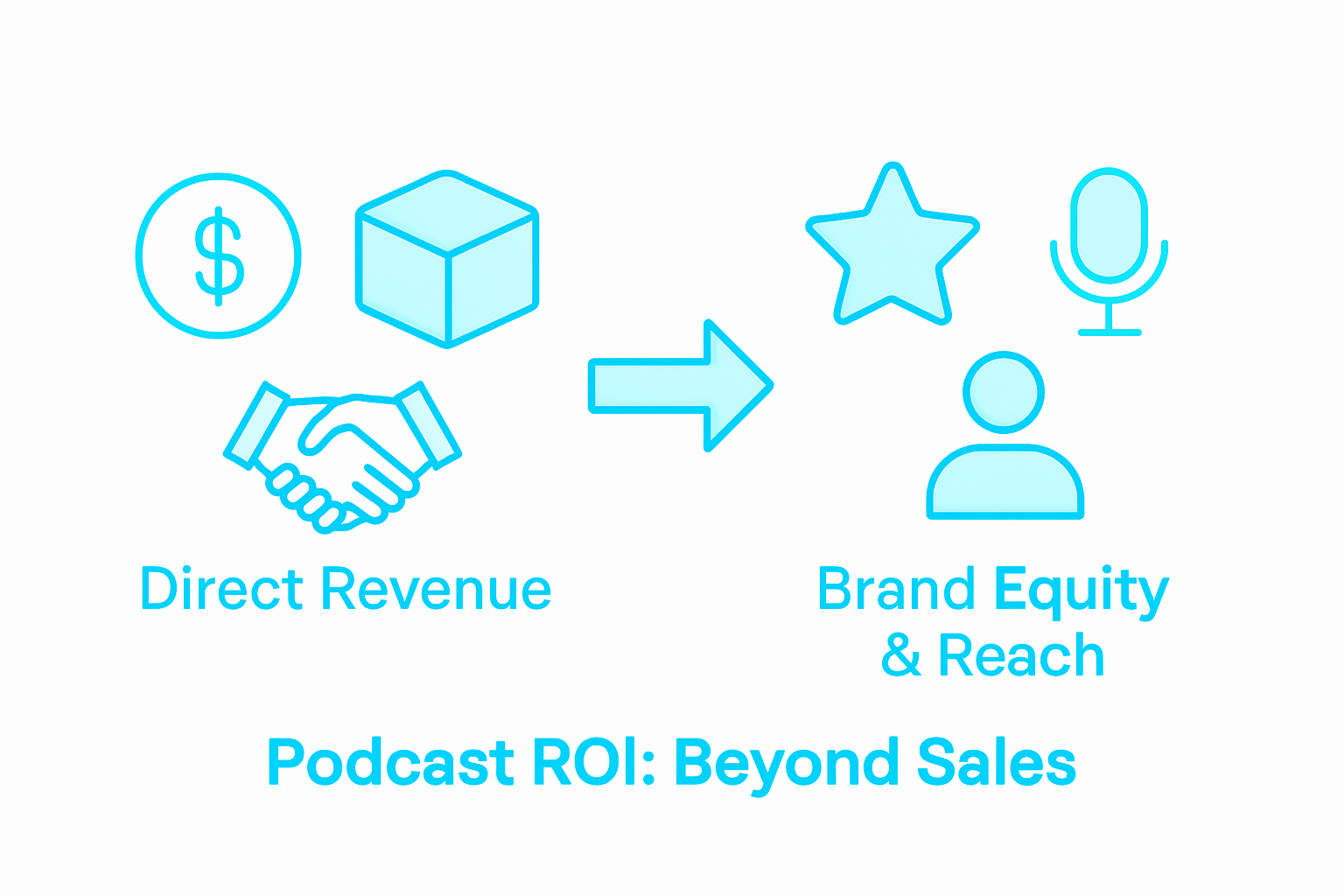
The most sophisticated podcast monetization approaches integrate both direct and indirect ROI strategies. Successful content creators recognize that true value emerges through a holistic approach that balances immediate financial goals with strategic audience development. Key ROI types include:
Direct ROI Methods:
- Sponsorship revenue
- Affiliate marketing commissions
- Direct product sales
- Merchandise income
- Paid speaking opportunities
Indirect ROI Methods:
- Brand awareness expansion
- Audience trust building
- Professional networking
- Content repurposing opportunities
- Thought leadership positioning
Understanding this comprehensive ROI landscape allows podcasters to develop more nuanced monetization strategies that maximize both immediate and long-term value creation.
Analyzing Product Mentions and Consumer Trends
Product mentions within podcasts represent a powerful yet complex ecosystem of consumer insights and marketing opportunities. Podcast product discovery has emerged as a critical channel for understanding emerging consumer preferences and tracking real-time market trends. Data-driven marketing strategies reveal that podcast conversations generate nuanced consumer intelligence far beyond traditional advertising channels.

Research demonstrates remarkable effectiveness in podcast product mentions, with studies indicating extraordinary consumer engagement metrics. Trending product insights highlight that podcast recommendations carry significant purchasing influence, with consumers showing heightened trust in creator-endorsed products. Notably, podcast advertising generates exceptional brand recall, with some studies showing up to 73% brand recognition and nearly five times higher return on advertising investment compared to conventional media platforms.
The most sophisticated podcast product analysis approaches integrate multiple analytical dimensions:
Quantitative Analysis Methods:
- Frequency of product mentions
- Context of product discussions
- Audience demographic correlations
- Engagement rate tracking
- Purchase intent measurements
Qualitative Analysis Methods:
- Sentiment analysis of product references
- Creator credibility assessment
- Narrative positioning of products
- Long-term brand perception tracking
- Consumer trust indicators
Understanding these multifaceted insights allows marketers and creators to develop more targeted, authentic product recommendation strategies that resonate deeply with listener communities.
Measuring Impact: Engagement, Sales, and Awareness
Measuring podcast ROI requires a sophisticated, multi-dimensional approach that goes beyond simplistic metrics. Audience engagement represents the foundational layer of impact assessment, providing critical insights into content resonance and listener behavior. Audience engagement analysis reveals nuanced connections between podcast content and listener interactions that traditional marketing metrics often overlook.
The most comprehensive impact measurement strategies integrate quantitative and qualitative dimensions across three primary domains: engagement, sales, and brand awareness. Podcast advertising effectiveness demonstrates that successful impact measurement requires holistic tracking of listener responses, conversion pathways, and long-term brand perception. Advanced podcasters understand that true ROI emerges from understanding complex listener journey dynamics rather than relying on isolated performance indicators.
Key Impact Measurement Frameworks:
Engagement Metrics:
- Total listener downloads
- Average episode completion rates
- Social media mentions
- Review and rating volumes
- Listener interaction frequency
Sales and Conversion Metrics:
- Unique promo code usage
- Affiliate link clicks
- Direct product purchases
- Conversion rate tracking
- Revenue per listener segment
Brand Awareness Indicators:
- Podcast chart rankings
- Audience demographic expansion
- Brand recall percentages
- Cross-platform mention tracking
- Listener recommendation rates
Effective podcast impact measurement transforms raw data into strategic insights, enabling creators to optimize content, enhance audience connections, and develop more targeted monetization approaches.
Maximizing Podcast ROI With Data Insights
Maximizing podcast Return on Investment requires a strategic, data-driven approach that transforms raw information into actionable insights. Podcast data analytics represent the critical foundation for understanding audience behavior, content performance, and monetization potential. Podcast data analysis reveals intricate patterns that enable creators to make precise, targeted decisions about content strategy and revenue optimization.
Advanced podcasters leverage sophisticated analytical frameworks to unlock deeper understanding of their audience and revenue streams. Podcast data analytics demonstrate that strategic data utilization can dramatically enhance both audience growth and monetization potential. Research indicates podcast advertising can generate remarkable returns, with some studies showing a return on ad spend approaching nearly five times the initial investment, highlighting the transformative power of intelligent data interpretation.
Key Data-Driven ROI Optimization Strategies:
Audience Insights Techniques:
- Detailed listener demographic mapping
- Behavioral pattern recognition
- Content consumption trend analysis
- Listener preference segmentation
- Predictive audience growth modeling
Revenue Maximization Approaches:
- Targeted sponsorship matching
- Personalized advertising placement
- Conversion pathway optimization
- Dynamic pricing strategy development
- Cross-platform monetization planning
Effective data insights transform podcasts from content platforms into strategic business assets, enabling creators to continuously refine their approach and maximize both audience engagement and revenue potential.
Unlock True Podcast ROI by Turning Conversations Into Real-Time Commerce Insights
The article highlights the challenge podcasters and marketers face in measuring podcast ROI beyond simple sales numbers — balancing direct revenue with long-term brand building and audience engagement. The key pain points include understanding product mentions, tracking audience behavior, and converting nuanced podcast conversations into measurable business growth. If you want to harness the full power of your podcast data to reveal trending products, identify key audience preferences, and maximize monetization opportunities, rely on advanced analytics designed specifically for podcasts.
Prodcast is your essential partner for transforming spoken content into actionable insights. Our AI-powered platform analyzes thousands of podcast transcripts to detect product mentions, expert recommendations, and audience trends that fuel smarter marketing and better monetization. Discover how to tap into powerful data-driven strategies like tracking product popularity across niche markets or measuring engagement that truly drives ROI. Explore how brands and creators use AI for deeper audience understanding and strategic growth in our Podcast Advertising Effectiveness and Podcast Data Analytics Boost Shopping and Brand Sales in 2025 guides.
Stop guessing and start leveraging podcast conversations now. Visit Prodcast to see how you can unlock hidden product trends and audience insights immediately. Turn your podcast ROI from abstract to actionable with data that drives both audience growth and revenue. Take your podcast monetization to the next level today.
Frequently Asked Questions
What does podcast ROI mean?
Podcast ROI refers to the measurement of financial and strategic value generated from podcast content and audience engagement, encompassing both direct and indirect returns beyond just immediate sales.
How can I measure the ROI of my podcast?
Measuring podcast ROI involves tracking various metrics such as listener engagement, audience demographics, conversion rates, and brand awareness indicators, using both quantitative and qualitative analysis methods.
What are some examples of direct and indirect ROI in podcasting?
Direct ROI includes tangible revenue sources like sponsorships, merchandise sales, and affiliate marketing, while indirect ROI encompasses brand awareness, audience trust, and professional networking.
How can data insights improve my podcast’s ROI?
Data insights can enhance podcast ROI by providing a deeper understanding of audience behaviors and preferences, allowing for targeted content strategies, optimized monetization approaches, and improved engagement rates.