🎯 All Moments (87)
Click any moment to jump to that point in the video
Is Liverpool Losing Its Identity? The 'Galactico' Transfer Concern
The host expresses concern about Liverpool's recent transfer window, where the club has reportedly pursued 'very, very best names' and 'number one choices for Real Madrid.' He fears this shift away from signing 'character and culture fit' players might lead to a 'Falcao Di Maria moment,' where big names don't integrate well.
Klopp Challenges the 'Struggling' Narrative: Liverpool's Earnings vs. Spending
Jürgen Klopp pushes back on the media narrative that Liverpool is 'struggling' despite huge spending. He points out that while they spent 450 million, they also 'earned 200 odd million as well,' emphasizing that the club's financial decisions are well-managed and deserving of trust from supporters.
Liverpool's £450 Million Spending Spree: A New Era?
The host highlights Liverpool's recent massive spending of '450 odd million' on new players, breaking transfer records and bringing in many new faces. This clip sets up a discussion on whether this signifies a new challenge and a departure from previous team-building philosophies.
Does How You Win Really Matter? Klopp's Take on 'Heavy Metal Football'
Jürgen Klopp addresses the question of whether the style of winning (e.g., 'heavy metal high intensity' with many goals) matters more than just securing three points. He affirms that it is indeed important for the fans and the overall experience, going beyond mere results.
The Unique Excitement of the English Transfer Window
Jürgen Klopp observes that building a football team is a 'work in progress all the time,' but highlights how 'English people in professional football enjoy the day a bit more than probably in other countries' when it comes to transfer windows. He shares that he learned to appreciate this excitement.
Jürgen Klopp's Respect for Pep Lijnders Joining Manchester City
Jürgen Klopp addresses the topic of his former assistant manager, Pep Lijnders, joining Manchester City, expressing absolute support and respect. He praises Lijnders as an inspiration and highly respects Pep Guardiola, seeing no issue with the collaboration. Klopp highlights Lijnders' energy and spark, believing he is exactly what Guardiola would be looking for.
The Origin of Klopp's 'Heavy Metal Football'
Jürgen Klopp explains how his early struggles as a football player, where teammates were better than him, led to his 'heavy metal band' style of play, emphasizing maximum effort for 90 minutes. This moment is clippable for its insight into his unique coaching philosophy and personal development.
Klopp's Parents: The Caring Mom and The Expecting Dad
Jürgen Klopp describes the contrasting influences of his parents: a deeply caring mother whose sole purpose was her children, and a father who, despite his love, always had high expectations and was 'not really happy with' his son's performance. This is clippable for its personal insight into the foundational elements of his personality.
My Dad Never Let Me Win: The Competitive Upbringing of Jürgen Klopp
Klopp recounts how his father would race him on ski slopes and in sprints, never allowing him to win. He reflects on whether this was 'right' or 'nice,' acknowledging the intense competitiveness that shaped his upbringing. This is a vivid, impactful anecdote about the origins of his drive.
Why Money Became a Driving Force: Klopp's Childhood Financial Concerns
Jürgen Klopp reveals that growing up, money was an issue, leading to 'bad discussions' and arguments in his home. This experience instilled in him a strong desire to earn enough money to avoid such conflicts in his own future family life. This is a relatable and powerful insight into his personal motivations.
Jürgen Klopp's First Steps to Revive Liverpool: Organization and Confidence
Jürgen Klopp details his immediate priorities upon joining Liverpool, focusing solely on improving the football team rather than club infrastructure. He humorously describes the shock of small English dressing rooms and how he learned to plan mid-to-long term after tackling initial challenges. His first core objectives were to organize the team, instill confidence, and get them winning, starting with the football basics.
The "Organized Chaos": How Klopp Coached Liverpool with No Time to Train
Jürgen Klopp reveals the intense challenges of coaching a top football team, describing how he often had "no time to train" and had to implement an "organized chaos" approach. He explains that the relentless game schedule, especially with European competitions and deep cup runs, means managers are "set up to fail" in developing a comprehensive style of football, forcing them to use every small moment to implement ideas.
From Player to Manager: Klopp's Journey of Maturity and Love for the Game
Jürgen Klopp reflects on his personal growth from a young player to a mature manager, emphasizing his deep love for football and the joy of working with outstanding talents, even if he wasn't the best player himself. This moment highlights his humility and passion.
Friend, Not Best Friend: Klopp's Player Relationship Philosophy
Jürgen Klopp explains his nuanced approach to player relationships, stating he wanted to be their friend but couldn't be their 'best friend' due to his role in holding them accountable. This offers insight into the boundaries and emotional intelligence required in top-tier management.
Why 1-0 Isn't Always Enough: The Liverpool Way
Jürgen Klopp discusses that while a 1-0 win might happen, it should not be the target or purpose for a club like Liverpool. He argues that top clubs have a responsibility to entertain and win clearly, reflecting a philosophy beyond just points, especially for a club of Liverpool's stature.
Make People Enjoy the Football You Play: Klopp's Core Principle
Jürgen Klopp emphasizes the importance of making people enjoy the football his team plays, highlighting that it's a core responsibility to the fans. He expresses his love for both thrilling victories and even 1-0 wins, as long as the effort and enjoyment are there.
Klopp's 'Big Aura': The Host's Description and Klopp's Humorous Response
The host asks Jürgen Klopp about his 'big aura' and how someone could succeed him. Klopp humbly states he doesn't fully understand what it means but acknowledges seeing it in others. The host describes it as 'passion,' 'ability to talk,' and 'inspire people,' leading to a lighthearted moment when Klopp jokes about needing to go to the toilet.
Klopp's Responsibility to His Successor: Making the Transition Easy
Jürgen Klopp explains his decision to announce his departure when he did, emphasizing his responsibility to make the transition as easy as possible for his successor. He highlights his desire for Liverpool to continue to succeed, regardless of who is managing.
Arne Slot's Smart Approach: Inheriting the Best Squad
Jürgen Klopp praises Arne Slot's intelligent approach to taking over Liverpool, emphasizing that Slot saw it as inheriting a fantastic team rather than just 'filling big shoes.' The host adds that many consider it the best squad Liverpool has ever had, and Slot's initial strategy was to not radically change things, which Klopp validates as 'super smart.'
Confidence and Decisive Changes: Keys to Managerial Success
Jürgen Klopp highlights the importance of making a few decisive changes to achieve success, even with a strong team. He also emphasizes that a manager needs to be 100% sure of their approach and have the confidence to implement it, as indecision doesn't work in the challenging world of football management.
The Incredible Challenge of Modern Football Management
Jürgen Klopp describes the immense and unpredictable challenges of being a football manager in the modern era. He highlights the pressures of competitive leagues like the Premier League, constant media scrutiny, and the daily surprises that can turn a small issue into a major problem.
New Signings, New Challenges: Why Development Needs Time
Jürgen Klopp addresses the challenge of integrating many new signings, stating that it's a 'completely normal' process. He emphasizes that 'change always has an impact and change always needs time,' and that even with good players, development, adaptation, and finding chemistry are crucial for success, without any guarantee of immediately winning again.
Why You Can't Just Buy a Championship: 'The Other Teams Don't Sleep'
Jürgen Klopp explains that winning a championship and then spending money doesn't guarantee another win because 'the other teams don't sleep.' He highlights the relentless nature of competition and the role of luck in decisive moments, a reality 'nobody wants to hear.'
Klopp's Transfer Philosophy: Building Stands, Not Just Buying Players
Jürgen Klopp contrasts his era's financial strategy at Liverpool, which focused on building three new stands and a training ground, with the current high spending on transfers. He reveals his past unawareness of such large transfer budgets and emphasizes his pride in achieving success while investing in long-term infrastructure.
Liverpool's Enduring Infrastructure: A 'Fantastic Story' Beyond Transfers
Jürgen Klopp praises the quality of Liverpool's new training ground and stadium stands, calling it a 'fantastic story' that will last forever. He highlights the unique achievement of building a new stadium within the existing Anfield site, underscoring the long-term benefits and vision for the club.
Culture Fit Over Galacticos: The Klopp-Era Liverpool Philosophy
The host observes that during Jürgen Klopp's time, Liverpool didn't sign 'Galactico' players like Ronaldo or Messi, but instead focused on players with character and culture fit, who then became 'unbelievable players' capable of beating anyone. This contrasts with a perceived shift in the club's current transfer approach.
The Reality of Squad Management: Injuries and Player Expectations
Jürgen Klopp describes the everyday reality of football management, even with a 'perfect squad.' He explains that while players expect to start, injuries inevitably create opportunities, and managing these expectations and rotations is a normal, ongoing challenge for any manager.
Klopp on Liverpool's Net Spend: Challenging Media Narratives
The host presents a net spend graph showing Klopp's lower spending compared to rivals, and mentions media speculation that owners weren't providing money. Klopp clarifies his stance, stating it wasn't his job to 'squeeze' money and that his focus was always on making the existing squad the best it could be.
Manager's Role in Transfers: It's Not Up to the Coach
Jürgen Klopp clarifies that he was never overly worried about net spend, as the decision on how much money to spend is not ultimately the manager's. He explains that other people decide the budget, and if the money is available, it should be spent on good players, which he believes Liverpool did this year.
Unprepared for Tragedy: How Unforeseen Events Shape Decisions
Jürgen Klopp emphasizes that managers cannot be prepared for dealing with personal tragedies and how such unforeseen events completely alter plans, like a transfer window. He highlights the difficulty of having to 'sort the things you did never expected that you have to think about.'
The Transfer Committee: How Decisions Are Made
Jürgen Klopp explains the role of a transfer committee, implemented to reduce the manager's sole decisiveness in transfers due to past issues. He confirms his willingness to discuss with everyone, but maintains a crucial veto: 'as long as no player signs for the club I don't want.'
Build the Best Squad: Klopp's Post-Transfer Window Philosophy
Jürgen Klopp outlines his pragmatic approach to squad building: strive for the best possible squad during the transfer window, but once it closes, accept the team you have and go into the season with that. This highlights adaptability and resourcefulness in management.
Transfers Are a Process: No Single Genius Behind Signings
Jürgen Klopp clarifies that transfer decisions are a collaborative 'process' involving many people, not just one 'genius' like Michael Edwards. He emphasizes that scouting, negotiating, and timing are collective efforts, and that transfer additions should be logical and transparent, not surprises.
Klopp's Humility: Challenging the 'Ultimate Power' Perception
The host highlights Jürgen Klopp's immense global stature, comparing him to Sir Alex Ferguson and questioning how anyone could overturn his opinion. Klopp humbly dismisses this 'outside world' perception, explaining that he always needed other people's input to gain a better view and encouraged arguments for the best outcome for the club.
The Darwin Nunez Dynamic: Why Managers Can't Please Everyone
Jürgen Klopp addresses Darwin Nunez's perceived unhappiness, explaining the complex reality of managing a striker who isn't scoring or playing as often as desired. He highlights that in a competitive environment, it's impossible for a manager to please all 25 players, and more will be unhappy than happy, a normal part of the job.
Jürgen Klopp on His Faith: Living Together and Collective Well-being
Jürgen Klopp discusses his personal faith, emphasizing that for him, it's less about traditional religiosity and more about a philosophy of living together. He believes in tolerance and ensuring the well-being of all, not just oneself. He describes this understanding as based on his faith and common sense, viewing religion as a force that keeps people in a good place and helps them navigate a shared world.
Human Nature in Football: Why Players Blame the Coach
Jürgen Klopp offers an insightful look into player psychology, explaining that it's 'human nature' for players to see a new coach as a fresh start if things aren't going well. He acknowledges that players often blame the coach for lack of playing time, illustrating the challenges of maintaining harmony in a competitive environment where performance dictates opportunity.
The Strategic Decision to Sign Darwin Nunez: Speed and Actions
Jürgen Klopp details the collective decision-making process behind signing Darwin Nunez, explaining the strategic need for a striker with 'more speed and stuff like this' and 'more actions' to complement the existing squad, especially after Sadio Mané's departure. He acknowledges that it 'maybe didn't work out as good as it could' but highlights Nunez's crucial impact in moments like the Newcastle comeback.
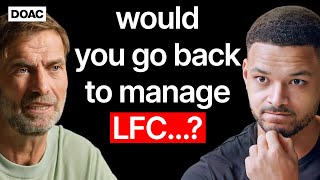
Jürgen Klopp on Missing Coaching and a Potential Return to Football
Jürgen Klopp reflects on his post-management life, revealing that he doesn't miss the day-to-day aspects of coaching like press conferences or long training sessions in the rain. However, he admits to missing the human connection with people. He also discusses the theoretical possibility of returning to manage Liverpool in the future, stating his current happiness with his new project.
Jürgen Klopp on Why Respecting the Gardener is Crucial for Team Success
Jürgen Klopp emphasizes that showing respect to every individual in an organization, from the kitchen staff to the gardeners, is fundamental to building a cohesive and successful team. He believes that the respect shown to others is the respect received, and this foundational principle translates into how teammates appreciate each other's efforts, ultimately impacting performance.
Jürgen Klopp on His Mother's Passing, Dementia, and the Sadness of an Online Funeral
Jürgen Klopp shares a poignant story about his late mother, Lisbet, who passed away in 2021. He recounts her pride in his achievements and the difficulty of not being able to attend her funeral due to pandemic travel restrictions, describing the online funeral as one of the saddest experiences of his life. He also speaks openly about his mother's battle with dementia and expresses a heartfelt wish for a scientific solution to such diseases.
The Heartbreak of Dementia: When a Parent No Longer Recognizes You
Jürgen Klopp discusses the profound emotional impact of his mother's dementia, particularly the heartbreak for family members when a loved one can no longer recognize them. He describes the strange nature of the disease, where long-term memories might remain while immediate family recognition fades. He expresses deep empathy for his mother's struggle and reiterates his hope for a medical breakthrough.
Jürgen Klopp's Post-Management Ambitions: Travel, Family, and Contentment
Jürgen Klopp shares his current life goals and deep sense of contentment. He expresses a desire to travel, spend more quality time with his wife, children, and grandchildren, and excel in his new role with Red Bull. He emphasizes the importance of staying healthy and enjoying this phase of life, reflecting on how happily his career and private life have unfolded, surpassing his own expectations.
Jürgen Klopp on Not Proving Himself and His Commitment to Current Roles
Jürgen Klopp explains why he has no desire to prove himself as a manager by immediately taking on another club. He highlights his unwavering commitment to his current role, recalling how he never looked to leave previous clubs like Mainz or Dortmund until he felt it was genuinely the right time. He suggests that while a return to management might happen if the 'feeling' is right, he won't force it or juggle multiple thoughts while committed to a project.
Jürgen Klopp on Regret: Why He Wouldn't Change a Single Moment
Jürgen Klopp answers a question about whether he would go back and change any moment in his career. He firmly states he wouldn't, explaining that the truly decisive moments, like iconic goals in football matches, were often beyond his direct influence. He maintains that everything he said was for the right reasons at the time, and while impacts varied, he accepts the outcomes.
Jürgen Klopp's Hilarious Reaction to Host Being a Man Utd Fan
The host playfully reveals he's a Manchester United fan and jokes about Liverpool's upcoming match against United, hoping for a Liverpool loss. Klopp, unaware of the host's allegiance, shares a funny anecdote about watching old Liverpool vs. Manchester United highlights (including the 7-0 and 5-0 wins) just before the interview, leading to a humorous moment of realization and playful banter.
Klopp's Genius Method for Handling Player Social Media Missteps
Jürgen Klopp shares his unique and effective approach to dealing with players who post inappropriate content on social media, even if they delete it. He describes how he would make them explain themselves in front of the entire team, leading to a lasting deterrent.
How Jürgen Klopp's Sons Sealed His Move to Liverpool
Jürgen Klopp recounts the moment he received the offer from Liverpool while on a family holiday. He shares a humorous anecdote about his sons' immediate and enthusiastic reaction to the news, which he describes as a sign of destiny, solidifying his decision to join the club.
Jürgen Klopp on the Dangers of Short-Term Thinking in Football
While declining to directly analyze Manchester United's struggles, Jürgen Klopp offers a broader insight into a common pitfall in football management: the constant rush to find solutions for "now" without considering mid-to-long-term development. He explains how this pressure often leads clubs to make hasty decisions, preventing sustained success and improvement.
Manchester United's Shift to Long-Term Vision Over Instagram Followers
The host expresses his strong faith in Manchester United's new leadership and management, highlighting a perceived shift towards a long-term vision and a focus on culture, rather than the previous strategy of acquiring players based on their fame or social media following. He sees this as a crucial step for the club's future success, a sentiment Jürgen Klopp agrees with.
Jürgen Klopp's First Impression of Liverpool: A "Proper Engine Room"
Jürgen Klopp explains why Liverpool felt like a genuine "football project" to him upon arrival, contrasting it with Manchester United's approach. He details his initial assessment of the Liverpool squad, highlighting players like Henderson, Milner, and Lallana as a "proper engine room" with smart players and a strong attitude, which appealed to his philosophy for building a successful team.
Klopp's Humorous Response to 'Big Shoes to Fill'
After the host discusses the 'big shoes to fill' for his successor due to his aura, Jürgen Klopp lightens the mood with a sudden, humorous declaration about needing to use the toilet, followed by a shared laugh about the challenge of his succession.
An Incredible Shock: Klopp's Emotional Struggle with Loss
Jürgen Klopp describes the profound emotional impact of a player's death, admitting he still struggles to speak about it properly. He highlights the 'incredible shock' for both himself and the team, emphasizing the omnipresent void left in the dressing room and the difficulty of dealing with such a loss on a personal level.
A Family Member: Klopp's Personal Reaction to the News
Jürgen Klopp recounts the moment he received the devastating news of a player's death, describing his disbelief and profound shock. He shares how he sat without speaking a word, emphasizing that the player was like a 'family member,' illustrating the deep personal bonds formed within the club.
Tactics vs. Relationships: What's More Important for Team Success?
Jürgen Klopp challenges the conventional focus on tactics and strategy in leadership, arguing that building strong relationships and fostering a cohesive group is equally, if not more, important. He asserts that a team with the best tactics but lacking respect and camaraderie will fail, while a team that loves each other can still win even with 'worst tactics'. He emphasizes using the majority of available time to build the best possible group.
Diego Jota: A Special Young Man with a Powerful Presence
The host provides factual details about Diego Jota's tragic death and shares a quote from Jota about feeling Klopp's presence. Klopp reciprocates, stating he was equally impressed by Jota's presence, describing him as a 'very, very special young man,' highlighting the mutual respect and profound impact of the player.
"You Changed an Entire Club, You Changed an Entire City" - Christian Heidel on Klopp's Legacy
Christian Heidel, the man who gave Jürgen Klopp his first managerial job, delivers a powerful and emotional message praising Klopp's transformative impact on Mainz, Dortmund, and Liverpool. He highlights Klopp's unique ability to change clubs and cities, emphasizing his authenticity and genuine personality as key to his success.
The Real Reason Jürgen Klopp Left Liverpool
Jürgen Klopp explains the true reasons behind his departure from Liverpool, citing a lack of energy for the immense responsibilities and the need for a break, rather than a need to rebuild the team. He details the increasing administrative burden and the absence of a structured leadership team around him, especially post-COVID, which made the job intensely demanding.
Why Klopp Didn't Join Manchester United & His Thoughts on Arne Slot
Klopp reveals there were 'reasons in that conversation which I didn't like' regarding Manchester United, and praises his successor, Arne Slot, for not changing much at Liverpool. This is clippable for addressing a major career decision and offering insight into his view on succession.
Jürgen Klopp on Turning Near Misses into Positive Forces
Prompted by Jamie Carragher's observation about his numerous near misses in his career, Jürgen Klopp explains his philosophy on dealing with disappointment and how he transforms setbacks into motivation and learning opportunities, rather than letting them lead to a downward spiral.
The Entrepreneurial Lesson from Man Utd's Post-Ferguson Struggles
A Manchester United fan and entrepreneur reflects on his club's struggles post-Sir Alex Ferguson, observing their shift to buying massive name players like Di Maria, Falcao, Pogba, and Ronaldo, which ultimately failed. He contrasts this with Jürgen Klopp's philosophy of prioritizing attitude and character over Instagram followers, asking Klopp for his objective view on what United missed.
Why Treating Everyone the Same is 'Crazy' in Management
Jürgen Klopp challenges the common business mantra of treating everyone consistently and the same, arguing that it's 'crazy' if you want to get the best out of people. He contrasts this with the football world, where understanding individual backgrounds is crucial. This is a counterintuitive take on leadership that sparks debate.
Why Individual Players Can't Solve a Club's "Real Problems"
Jürgen Klopp discusses the constant scrutiny in football ("You win, you're the greatest. You lose, you know nothing. You draw, you're boring.") and emphasizes that true success comes from continuous development. He explains that individual players, even star goalscorers, cannot solve a club's underlying "real problems," using the example of selling Coutinho and strategically investing in foundational players like Alisson and Van Dijk for long-term stability.
How Underdog Football Teams Teach a Crucial Business Lesson
The host draws a powerful analogy between football and business, highlighting how teams like Crystal Palace and Bournemouth succeed without having the best players or the most money. This moment emphasizes the inspiring narrative that top talent or resources aren't always necessary for the best outcomes, offering a valuable lesson for entrepreneurs and leaders.
"Find a Reason to Enjoy the Situation Again": Klopp's Advice for High-Pressure Environments
Jürgen Klopp distinguishes between managing underdog teams and a club like Manchester United, explaining the intense scrutiny every step of a big club takes. He shares his philosophy on navigating such pressure, emphasizing the need to "find a reason to enjoy the situation again," even simple victories, and recounts a story of celebrating a draw with West Brom to foster team unity despite media criticism.
Confidence as a 'Little Flower': How Klopp Builds Self-Belief in Players
Klopp describes confidence as a 'little flower' that is constantly being 'stepped on' in football due to mistakes. He explains his approach: 'If you would believe as much in yourself as I do that will be a start. But as long as you cannot do that just trust me.' This powerful metaphor and direct advice offer valuable insight into developing self-belief.
The Klopp Effect: How He Inspired a City and the Premier League
The host praises Jürgen Klopp's profound impact, describing him as more than just a manager but 'the spirit of the city' of Liverpool, personifying its passionate, all-in, and together fan base. He highlights Klopp's unique ability to bring teams and cities together, creating a special feeling that inspired both Liverpool and the wider Premier League, influencing even rival fans and business leaders with his philosophy of focusing on people and togetherness over just tactics.
The Blend: Confident Dad, Caring Mom - How Klopp Developed His Leadership
Klopp attributes his public speaking ability to his confident father and his love for people to his caring mother. He states that his personality, and therefore his leadership style, is a mix of these two strong influences. This is a concise and insightful explanation of his core traits.
Klopp's Ultimate Goal: A Club That Benefits After He Leaves
Jürgen Klopp expresses his profound desire for Liverpool to benefit from his tenure long after he has left. He emphasizes that while winning games is his immediate target, his deeper wish is for the club to experience lasting positive impact from the time they spent together.
Jürgen Klopp's Philosophy: How to Get People to 'Walk Through Fire'
Jürgen Klopp shares his core leadership philosophy on getting the best out of a group of people. He emphasizes the importance of growing together, being interested in each other's problems, and creating a special environment where everyone feels valued. He believes success comes from deep connections and a culture of togetherness, rather than just tactics.
Klopp's Blueprint: How to Instantly Improve a Football Team
Jürgen Klopp outlines the fundamental "little ideas" he implemented to quickly improve his teams, particularly at Liverpool. He emphasizes the paramount importance of achieving "stability" through organization, ensuring the opponent finds it difficult to score. Beyond tactics, he stresses the need for players to "run their socks off" to visibly demonstrate their desire for change and achievement to the fans.
Jürgen Klopp on the Birth of "Heavy Metal Football" and Why His Teams Never Held Back
Jürgen Klopp reveals the unexpected origin of the "heavy metal football" nickname, explaining it came from a comparison to Arsène Wenger's "orchestra" style. He reflects on the intense, passionate, and relentless nature of his teams, which even Manchester United fans hated playing against. Klopp emphasizes his core philosophy: "Don't waste time with holding back," always pushing for maximum effort and overwhelming emotional play.
The Saddest Day: How a Tragedy Changed Liverpool's Transfer Window
Jürgen Klopp emotionally describes 'the saddest day of last year' – a specific moment that drastically altered Liverpool's transfer window. He introduces the profound challenge of replacing a player who was not just skilled but also a beloved figure and an exceptional person, highlighting the immense personal and professional impact of the loss.
The Night I Became an Adult: How Becoming a Dad Changed Jürgen Klopp's Life
Klopp candidly shares his fear upon learning his girlfriend was pregnant at 20, admitting he wanted to 'run away.' However, he describes the night his son Mark was born as the moment he 'became an adult' and his life changed 'in the right direction,' leading to a level of maturity beyond his peers. This is a powerful and honest personal anecdote about transformation.
The Power of Private Conversations: Unlocking Player Potential
Klopp emphasizes that the 'most important conversations' with players were private, not football tactics. He explains that by asking 'what's going on' when a player isn't performing well, managers can uncover personal problems (like massive problems at home) that are affecting focus, allowing for tailored support rather than generic treatment. This is a crucial insight into empathetic leadership.
Give Your Absolute All: Klopp on Why Players Earn Their Money
Jürgen Klopp delivers a powerful message to players about giving their absolute all from the first to the last minute. He links this dedication directly to fan engagement, explaining that players earn money because people are invested in watching the game.
Realizing My Fame: Klopp's Post-Liverpool Self-Awareness
Jürgen Klopp shares a humble and humorous reflection, admitting he only realized 'how famous I am' and 'how good I was as a coach' after leaving Liverpool. He explains that during his job, he simply focused on daily tasks, believing 'what I can do everybody can do,' a perception he now questions.
Jürgen Klopp's Authentic Leadership: The Same Man On and Off Camera
The host concludes by summarizing feedback from people who worked with Jürgen Klopp, highlighting his consistent character: being the 'same man on and off camera'. Klopp is described as a person who brings people together, is extremely likable, maintains high standards, and possesses incredible passion. This authenticity is credited as the reason people were willing to 'walk through fire' with him, underscoring his remarkable accomplishments.
The Liverpool Way: Understanding Community and Responsibility
Jürgen Klopp defines 'the Liverpool way' as understanding the community – both the city and the global fanbase. He explains that the club means more than just football to its supporters and that this responsibility makes their actions more important than elsewhere, shaping the players' understanding of playing for Liverpool.
The Absolute Best We Could Have Done: Klopp's View on Effort and Life
Jürgen Klopp shares his philosophy on giving 'absolute everything' for a lasting legacy, both in football and in life. He emphasizes the importance of looking back with pride, knowing you did your best, and considering the long-term effects of solving problems.
The 'Through Line' of Respect: From Gardener to Champions League Success
Jürgen Klopp explains the indirect but crucial link between showing respect to every staff member and achieving top-tier success like winning the Champions League. He argues that a lack of appreciation for support staff can lead to a lack of appreciation for teammates. The host reinforces this with an anecdote about Sir Alex Ferguson knowing staff names at Old Trafford, highlighting how small acts of respect reflect a deeper, positive club culture, and its decay can be seen in such 'downstream symptoms'.
Klopp's Golden Rule: 'If You're Not Leo Messi, You Have to Defend'
Jürgen Klopp shares a fundamental rule he instilled in his teams: everyone must defend, unless they are a generational talent like Lionel Messi. He humorously adds that since he 'never had Leo Messi,' all his players had to defend. This is a memorable, impactful, and humorous quote that encapsulates his team philosophy.
Klopp's Philosophy: Why He Sees Himself as a 'Constant Tryer'
Jürgen Klopp reveals a core belief that has shaped his career: he doesn't see himself as a 'constant winner' but a 'constant tryer.' He explains how this perspective helps him deal with setbacks and continuously strive for improvement, emphasizing that nobody wins all the time and learning from failure is crucial.
Jürgen Klopp Reveals He Turned Down Manchester United
Jürgen Klopp confirms that Manchester United approached him to become their manager after Sir Alex Ferguson retired. He explains why he turned down the opportunity, citing it as the "wrong time, wrong moment" for him while he was still committed to Borussia Dortmund, creating a significant "what if" moment in football history.
Klopp's Red Flag for Manchester United: "It Was Not My Project"
Jürgen Klopp elaborates on his decision to turn down Manchester United, explaining that the club's approach at the time felt like "not my project." He describes how United's focus on acquiring big-name players like Pogba or Cristiano, rather than building a cohesive football strategy, clashed with his philosophy, making Liverpool's "pure football project" much more appealing.
Klopp's Post-Final Loss Party: Celebrating Achievement Despite Defeat
Jürgen Klopp shares a powerful anecdote about losing the European League final in Basel and his unconventional decision to still throw a party for the team. He explains his philosophy of refusing to let defeat overshadow the achievement of reaching the final, rallying his players by telling them, "This is not the last final we played. This is the first final we played." This moment highlights his unique approach to managing disappointment and fostering a resilient team spirit.
Klopp's Golden Rule for Leaders: Say What They *Need* to Hear
Klopp defines true leadership communication: it's not about what you want to say, or even what they want to hear, but 'much more important what they need to hear' to deal with their situation. He argues that simply 'telling them off' doesn't work. This is a profound and actionable piece of advice for anyone in a leadership role.