CATEGORIES
TAGS
Discover new podcasts: step-by-step guide to hidden gems
TL;DR:
- Clear discovery goals improve podcast search effectiveness and reduce frustration.
- Data-driven platforms and community input enhance personalized podcast recommendations.
- Regularly testing and refining subscriptions helps maintain an engaging, relevant podcast feed.
There are over five million podcasts out there right now. Five million. And yet, most of us are stuck rotating through the same three shows we found two years ago. Sound familiar? Podcast listeners are increasingly searching for new content to enhance their lifestyle, but the sheer volume of options makes it genuinely hard to know where to start. This guide cuts through the noise and walks you through a practical, step-by-step approach to finding podcasts that actually match your interests, including shows that spotlight products, trends, and recommendations you care about.
Table of Contents
- Set your discovery goals and preferences
- Explore podcast discovery platforms and apps
- Leverage community trends, reviews, and social media
- Test, subscribe, and refine your podcast feed
- Why most podcast discovery advice misses the mark
- Discover standout podcast moments and products with Prodcast
- Frequently asked questions
Key Takeaways
| Point | Details |
|---|---|
| Clarify your listening goals | Define your favorite genres, interests, and desired product recommendations before searching for new podcasts. |
| Choose discovery platforms wisely | Select tools and apps that offer personalized filters, curated playlists, and trending topics for efficient podcast finding. |
| Tap into community insights | Use community reviews, forums, and social media groups to uncover trending podcasts and relevant show recommendations. |
| Regularly refine your feed | Continuously test, subscribe, and prune your podcast feed for maximum engagement and enjoyment. |
Set your discovery goals and preferences
Now that you’ve seen why discovering new podcasts matters, let’s start by defining your listening objectives. This is the step most people skip, and it’s exactly why they end up frustrated.
Before you open a single app, get clear on what you actually want. Are you hunting for fitness motivation? Skincare tips? Entrepreneur tools? Product recommendations from hosts you trust? Knowing your “why” makes everything downstream faster and more satisfying.
Here’s what to think through before you start searching:
- Favorite genres: Health, business, true crime, tech, beauty, personal finance? Start with what already lights you up.
- Product interest level: Do you want shows that actively recommend gear, supplements, books, or software? Or are you more focused on learning and entertainment?
- Secondary motivations: Some listeners want shopping inspiration. Others want to stay current with trends in their industry. Both are completely valid reasons to search.
- Listening context: Commute? Gym? Cooking? Your listening window shapes which show formats feel right (short episodes vs. long-form interviews).
Once you’ve answered these questions, you’ll know whether you’re looking for a 20-minute daily news brief or a two-hour deep-dive with a product-obsessed host.
Pro Tip: Use a free list-making app like Notion or Apple Notes to track your interests and build a “show wishlist.” This keeps your search focused and lets you compare options side by side before committing.
Here’s something genuinely useful to know: AI-driven recommendations personalize podcast suggestions based on actual listening behavior, not just genre tags. That means the more specific you get about your preferences, the better the results you’ll get from smart discovery tools. And if you want to explore personalized podcast picks that go beyond basic genre sorting, data-backed platforms are the way to go.
Setting your goals upfront isn’t just prep work. It’s the thing that separates a productive 10-minute search from an hour of aimless scrolling.
Explore podcast discovery platforms and apps
Once your interests are clear, it’s time to choose where and how to search for podcasts. Not all platforms are built the same, and the right one can save you a serious amount of time.

Most people default to Spotify or Apple Podcasts. Those are fine starting points, but they’re built for listening, not discovery. If you want to find shows that consistently talk about trending products or niche topics you care about, you need tools designed for that purpose specifically.
Here’s a quick comparison of popular discovery platforms to help you choose:
| Platform | Best for | Key feature | User rating |
|---|---|---|---|
| Spotify | General discovery | Algorithmic playlists, curated mixes | 4.7/5 |
| Apple Podcasts | Apple ecosystem users | Editor picks, curated charts | 4.5/5 |
| Podchaser | Deep research | Reviews, guest search, creator profiles | 4.4/5 |
| Listen Notes | Keyword search | Full-text episode search | 4.3/5 |
| Prodcast | Product trend discovery | AI-powered transcript analysis, product mentions | 4.8/5 |
For a more detailed platform comparison, it helps to see how these tools stack up across specific use cases.
When picking the best platform for your needs, consider these factors:
- Search depth: Can you search by episode topic, product name, or keyword? Or just show title and genre?
- Trend visibility: Does the platform surface what’s currently being discussed, or just what’s broadly popular?
- Recommendation logic: Is it algorithmic (based on listening habits) or editorial (curated by humans)?
- Product focus: If you care about product recommendations, look for platforms that track top podcast platforms and content trends across categories.
Reviewing the podcast content discovery tools available today makes it clear that the most powerful options go beyond simple charts. They let you search by what hosts are actually talking about, not just by show title or genre label. That’s a meaningful upgrade for anyone trying to find product-relevant content.
Leverage community trends, reviews, and social media
Beyond platforms, social connections and community input can reveal unsung podcast gems. Algorithms are helpful, but real humans often catch things an app never would.
Online communities are full of listeners sharing exactly the kind of recommendations you’re looking for. Reddit threads, Discord servers, and Facebook groups organized around specific niches (fitness, investing, skincare) regularly surface podcast episodes tied to products that are gaining traction right now.
Here’s how that plays out in practice:
- A fitness subreddit member shares an episode where a host reviews a new recovery tool. Within days, that episode is the most-discussed post in the thread.
- A beauty Discord drops a clip of a skincare podcast recommending a brand no one has heard of. Sales for that brand spike within a week.
- A tech Twitter thread links to an episode covering an AI productivity tool. The show gains 10,000 new subscribers in 48 hours.
Media trends directly affect how listeners discover and share new podcasts, which means paying attention to social signals isn’t just fun, it’s genuinely strategic.
Here’s a snapshot of trending podcast topics and the product categories they’re driving:
| Podcast genre | Trending topic | Product category |
|---|---|---|
| Health and fitness | Recovery optimization | Supplements, wearables |
| Business and entrepreneurship | AI productivity | Software, tools |
| Beauty and skincare | Clean beauty routines | Serums, SPF products |
| True crime and mystery | Investigative tools | Books, documentaries |
| Personal finance | Passive income strategies | Courses, apps |
If you’re interested in how AI-driven podcast products are shaping what listeners actually buy, community conversations are often the earliest signal. And for health-focused listeners, supplement podcast influences are becoming a major driver of purchasing decisions.
Pro Tip: Follow three to five genre-specific hashtags on Instagram or X (formerly Twitter) and check them weekly. You’ll catch trending podcast episodes tied to products before they hit the mainstream charts.
Test, subscribe, and refine your podcast feed
After leveraging community signals, you’ll want to organize your discoveries and narrow them into a personalized playlist. This is where most people get stuck. They subscribe to ten shows, get overwhelmed, and go back to their old favorites.
Here’s a smarter approach.
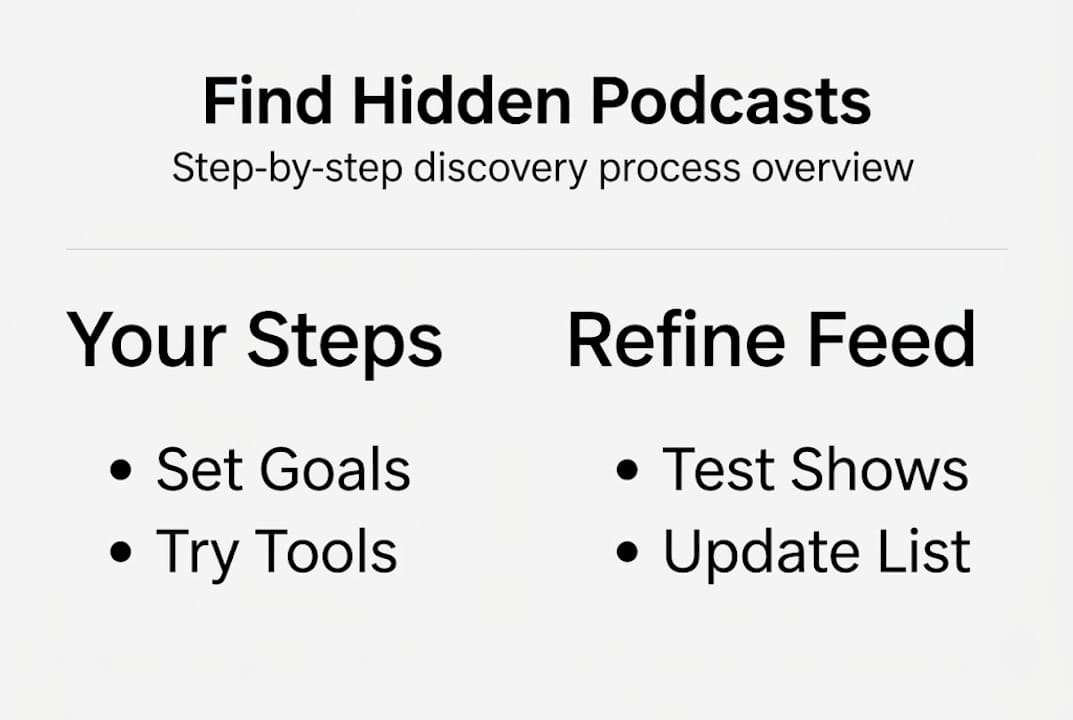
- Pick five new shows to trial. Don’t subscribe to everything at once. Choose five that align with your goals from step one and give each one three episodes before making a judgment.
- Track your engagement honestly. Did you pause an episode to Google a product that was mentioned? Did you finish it on the same day you started? Those are green flags. Did you skip ahead or bail halfway? That’s a sign.
- Rate each show after the trial. Use a simple 1 to 5 scale in your list-making app. Note what you liked and what didn’t land.
- Drop the low scorers without guilt. Time is the resource here. A show that doesn’t hold your attention after three episodes is probably not going to improve.
- Rotate in new shows monthly. This keeps your feed fresh and prevents the stagnation that sends people back to the same three shows.
Troubleshooting is part of the process too. If an episode won’t load, check for RSS feed issues in your app settings. If you feel overwhelmed by content, cut your active subscriptions to five or fewer. If you’re missing new episodes, make sure notifications are turned on for your favorites.
Podcast listeners use engagement data to refine their selections over time, and that same principle applies to your personal feed. The more intentional you are about what you keep, the better your feed gets. Pair that with solid analysis tools and you’ll have a feed that feels curated just for you.
Pro Tip: Set a recurring monthly reminder titled “Podcast feed refresh” in your calendar. Fifteen minutes once a month is all it takes to drop shows that have gone stale and add fresh ones you’ve bookmarked.
Why most podcast discovery advice misses the mark
Having walked through practical steps, let’s reconsider the standard podcast discovery framework and its real limitations.
Most guides tell you to check the charts, follow what’s trending on Spotify, or ask friends for recommendations. That advice isn’t wrong, exactly. It’s just surface-level. The charts reflect broad popularity, not personal fit. Friends recommend what they like, not necessarily what matches your specific interests or shopping habits.
The real shift happens when you move from passive browsing to active, data-driven discovery. Platforms that analyze what hosts are actually saying, which products get mentioned, and which topics are gaining momentum give you a fundamentally different signal. It’s the difference between guessing and knowing.
Podcasts featuring trending product mentions drive 35% more purchases than generic recommendations, because listeners trust the hosts they already follow.
That’s not a small gap. It means the shows you find through data-driven insights aren’t just more enjoyable. They’re more useful, and more connected to real purchasing decisions you actually care about. Discovery that starts with data ends with a feed that genuinely works for you.
Discover standout podcast moments and products with Prodcast
Ready to put your discovery strategies into practice? Here’s how Prodcast can supercharge your search.
Prodcast is built for exactly this kind of intentional, product-aware podcast discovery. Instead of manually scrubbing through hours of audio, you get access to curated podcast moments where hosts mention products, share recommendations, and drop the good stuff you actually came for.

Whether you’re tracking what supplements are trending in health shows or want to hear what the mass persuasion podcast is saying about influence and consumer behavior, Prodcast surfaces the clips and insights that matter. It’s the highlight reel for the internet’s smartest conversations, built for listeners who want more signal and less noise. Stop scrubbing. Start discovering.
Frequently asked questions
What is the fastest way to find new podcasts?
Use curated discovery platforms with personalized filters to quickly surface shows that match your specific interests, without manually sorting through charts or generic recommendations.
How do I discover podcasts related to product trends?
Follow community forums and social media groups where listeners share shows tied to trending product topics across health, beauty, tech, and business.
What should I do if podcast recommendations don’t match my preferences?
Refine your genre filters, engage in niche communities, and switch to platforms that use AI-driven personalization for more accurate matches.
Can I find podcasts by searching for trending products?
Yes, several podcast discovery tools let you search by product name, keyword, or trending topic to find episodes where those items are discussed.
How often should I update my podcast feed?
A monthly review works well for most listeners. Use engagement data from your own listening habits to drop shows that no longer hold your attention and rotate in fresh ones.