CATEGORIES
TAGS
How to make money with podcasts: a practical guide

Turning your podcast into a revenue-generating platform feels like solving a puzzle without all the pieces. You know monetization is possible because successful podcasters are doing it, but the path from passion project to profit remains frustratingly unclear. This guide cuts through the confusion by revealing proven strategies from top finance and business podcasts, showing you exactly how to build trust with your audience, implement multiple revenue streams, and scale your income without sacrificing content quality or burning out along the way.
Table of Contents
- Key takeaways
- Understanding the podcast monetization landscape
- Preparing your podcast for monetization success
- Executing monetization strategies that work
- Tracking progress and optimizing for growth
- Get started with Prodcast’s podcast monetization tools
- FAQ
Key Takeaways
| Point | Details |
|---|---|
| Audience trust foundation | Listeners will not engage with monetization until they trust you through consistent, helpful content. |
| Diverse revenue streams | Successful podcasters monetize through sponsorships, affiliates, memberships, and digital products to create stability. |
| Niche premium rates | Finance focused and niche podcasts attract higher CPMs due to targeted, engaged audiences. |
| Automation for scale | Automating processes and systems allows income growth without increasing burnout. |
Understanding the podcast monetization landscape
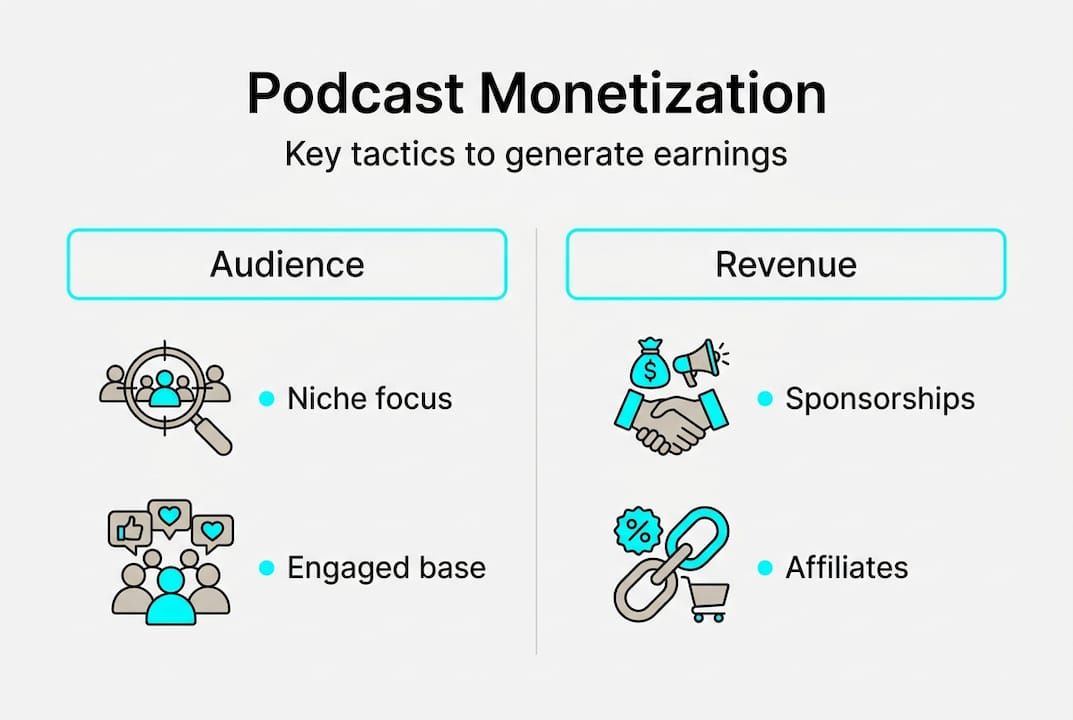
Before you can earn a single dollar from your podcast, you need to understand what makes monetization work. The foundation is simple but non-negotiable: audience trust. Listeners won’t click affiliate links, join memberships, or pay attention to sponsors if they don’t believe you’re genuinely trying to help them. This trust takes months to build through consistent, valuable content that solves real problems.
Once trust exists, monetization requires audience trust first; stack sponsorships with CPM rates between $15 and $50, particularly in finance niches where advertisers pay premium rates for engaged audiences. The most successful podcasters don’t rely on a single income source. They diversify across multiple channels to create stability and maximize earning potential.
Common revenue streams include:
- Sponsorships and advertising with CPM-based pricing
- Affiliate marketing for products you genuinely recommend
- Premium memberships offering exclusive content or community access
- Consulting or coaching services promoted through your show
- Digital products like courses, templates, or guides
Niche podcasts consistently outperform general-interest shows in monetization because advertisers value targeted audiences. A finance podcast with 5,000 engaged listeners attracts better sponsorship deals than a general lifestyle show with 20,000 casual listeners. The key is matching your content focus with advertiser needs while maintaining authentic connections with your audience. Explore how to monetize podcasts a step by step guide for detailed implementation strategies.
Preparing your podcast for monetization success
Successful monetization starts long before you pitch your first sponsor. You need a solid foundation that makes your podcast attractive to advertisers and valuable to listeners. This preparation phase separates podcasters who earn consistently from those who struggle to generate any revenue.
Start by creating content that genuinely helps your audience solve problems or achieve goals. Generic advice won’t cut it. You need specific, actionable insights that listeners can implement immediately. Monetization requires audience trust first, and trust grows when people see real results from following your recommendations. Record episodes consistently, maintain professional audio quality, and develop a recognizable format that keeps listeners coming back.
Follow these preparation steps:
- Define your niche with laser precision, focusing on a specific audience segment with clear pain points
- Build an email list from day one to maintain direct communication with your most engaged listeners
- Create a media kit showcasing your audience demographics, download numbers, and engagement metrics
- Set realistic monetization goals based on your current audience size and growth trajectory
- Research potential sponsors and affiliate partners whose products align with your content
- Plan content calendars around monetizable topics that naturally incorporate revenue opportunities
Pro Tip: Before approaching sponsors, run a listener survey to gather detailed demographic data. Advertisers pay premium rates when you can prove your audience matches their ideal customer profile with specific income levels, job titles, and purchasing behaviors.
Your content strategy should naturally lead to monetization opportunities without feeling forced. If you’re discussing productivity tools, affiliate partnerships make sense. If you’re teaching business strategies, consulting services fit naturally. The goal is creating podcast optimization maximize engagement and sales easily by aligning your content with revenue streams that genuinely serve your audience.
Executing monetization strategies that work
With preparation complete, it’s time to implement specific tactics that generate revenue. The most successful podcasters use a combination approach, layering multiple income streams to create financial stability and growth potential.

Sponsorship stacking remains the primary revenue driver for established podcasts. This means selling multiple ad spots per episode: a pre-roll at the beginning, mid-roll during content, and post-roll at the end. Finance podcasts command CPM rates between $15 and $50 because advertisers know these listeners make purchasing decisions based on expert recommendations. Start with podcast ad networks like Podcorn or Gumball for your first deals, then negotiate direct sponsorships as your audience grows.
Affiliate marketing works best when integrated naturally into your content. Don’t just read affiliate links. Share genuine experiences with products, explain why you recommend them, and provide context for how listeners can benefit. Travis Makes Money podcast focuses on strategies to make more money through habits, cold opens, strategy sprints, transparency, ethics, and demonstrates this approach by openly discussing monetization tactics with his audience.
| Approach | Example Podcast | Strategy Focus | Best For |
|---|---|---|---|
| Frugality-focused | The Ramsey Show | Debt elimination, extreme budgeting, wealth through saving | Audiences struggling with debt |
| Earnings-focused | Travis Makes Money | Income growth, sales skills, side hustles, habit formation | Audiences seeking income expansion |
| Balanced approach | Your Rich Life | Strategic spending, value-based money decisions, automation | Audiences wanting financial optimization |
The Ramsey Show offers tough-love debt elimination, budgeting, and wealth-building methodologies that resonate with listeners facing financial challenges. This creates natural opportunities for affiliate partnerships with budgeting tools, debt consolidation services, and financial education products.
Membership models provide recurring revenue and deeper audience connections. Offer exclusive content like extended interviews, bonus episodes, ad-free listening, or private community access. Platforms like Patreon, Supercast, or Memberful handle the technical infrastructure while you focus on creating value. Price tiers strategically: a basic tier at $5 monthly captures casual fans, while premium tiers at $15 to $25 monthly offer more substantial benefits for dedicated listeners.
Key execution tactics:
- Record authentic sponsor reads that sound like natural recommendations, not scripted advertisements
- Track affiliate link performance to identify which products resonate with your audience
- Create exclusive member content that complements your public episodes without cannibalizing free value
- Test different monetization approaches with small audience segments before full rollout
- Maintain transparency about sponsored content and affiliate relationships to preserve trust
Pro Tip: Use cold opens before your intro music to deliver immediate value and hook listeners before any ads play. This technique, popularized by shows like Travis Makes Money, increases completion rates and makes mid-roll ads more effective because listeners are already engaged.
Explore how to monetize podcasts a step by step guide and podcast roi turning conversation into commerce for additional implementation frameworks and case studies from successful podcast monetization campaigns.
Tracking progress and optimizing for growth
Implementing monetization strategies is just the beginning. Sustainable podcast income requires continuous monitoring, testing, and refinement based on real performance data. Without tracking, you’re guessing which tactics work and wasting effort on strategies that don’t generate returns.
Start with podcast analytics platforms that show download numbers, listener demographics, and engagement patterns. Spotify for Podcasters, Apple Podcasts Connect, and Chartable provide free baseline metrics. Pay attention to drop-off points in episodes to identify where listeners lose interest. If people consistently stop listening before your mid-roll ad, you need to improve content pacing or move the ad placement.
| Metric | What It Reveals | Optimization Action |
|---|---|---|
| Download growth rate | Audience expansion velocity | Adjust content frequency and promotion |
| Completion rate | Content engagement quality | Tighten episode structure, improve pacing |
| Affiliate click-through rate | Recommendation effectiveness | Test different product mentions and contexts |
| Membership conversion rate | Premium offer appeal | Refine member benefits and pricing |
| Sponsor renewal rate | Advertiser satisfaction | Improve ad integration and audience targeting |
Track affiliate performance through unique links and discount codes for each product you recommend. This data shows which recommendations your audience actually trusts and purchases. Double down on high-converting products and eliminate partnerships that generate clicks but no sales. Most affiliate networks provide dashboards showing clicks, conversions, and commission earned.
Follow these optimization steps:
- Review analytics weekly to identify trends and anomalies in listener behavior
- A/B test different ad placements, formats, and sponsor read styles across episodes
- Survey members quarterly to understand what exclusive content they value most
- Adjust pricing based on conversion data and competitor analysis in your niche
- Automate repetitive tasks like social media promotion and email sequences to free time for content creation
- Set monthly revenue goals and track progress toward targets with clear milestones
Actionable steps include mastering habits and sales skills for earning, balancing frugality with enjoyment, and using automation and systems to scale without burnout. Dynamic ad insertion tools let you update sponsor messages across your entire back catalog without re-editing episodes. Membership platforms automate billing, content delivery, and community management so you’re not manually handling administrative tasks.
Pro Tip: Create a simple spreadsheet tracking monthly revenue by source, total downloads, and hours invested. Calculate your effective hourly rate for podcasting. If it’s below your target, identify which activities generate the most revenue per hour invested and focus your energy there.
Balance financial goals with content quality and audience trust. Chasing short-term revenue through excessive ads or irrelevant affiliate promotions damages the foundation that makes long-term monetization possible. The most successful podcasters prioritize listener value first, knowing that revenue follows naturally when trust remains strong. Discover insights on podcast hosting reddit complete insights and trends and maximize podcast ad roi with youtube dynamic insertion 2026 for advanced optimization techniques.
Get started with Prodcast’s podcast monetization tools
You’ve learned the strategies that turn podcasts into profitable platforms. Now it’s time to implement them with tools designed specifically for podcast monetization and audience engagement. Prodcast analyzes thousands of podcast transcripts to reveal which products, brands, and recommendations actually resonate with listeners across different niches.

Discover trending products mentioned by successful podcasters in your niche. Our platform shows you what finance podcasters are recommending, which tools business shows feature most often, and what products generate the most listener interest. This data helps you identify affiliate partnership opportunities and understand what your audience actually wants to buy. Explore featured products like mass persuasion techniques discussed across top business podcasts, or see how shows mention bmw hyundai subaru jeep to understand automotive sponsorship opportunities. Even casual mentions like monster energy drink reveal patterns in how podcasters naturally integrate brand partnerships.
FAQ
How can I build trust quickly with my podcast audience?
Build trust through consistent, high-quality content that solves specific problems your listeners face. Be authentic about your own experiences, including failures and lessons learned, rather than presenting yourself as perfect. Engage directly with listener questions through email or social media, showing you genuinely care about helping them succeed. Transparency about sponsorships and affiliate relationships actually strengthens trust when you explain why you recommend specific products. Learn more through how to monetize podcasts a step by step guide for detailed trust-building frameworks.
What are the most profitable monetization methods for niche finance podcasts?
Sponsorship stacking delivers the highest returns, with CPM rates between $15 and $50 for finance-focused audiences because advertisers pay premium rates for engaged listeners making purchasing decisions. Affiliate marketing for financial products like investment platforms, budgeting tools, and courses generates strong passive income when recommendations align with your content. Premium memberships offering exclusive financial analysis, portfolio reviews, or community access create recurring revenue that scales as your audience grows.
How can I balance monetization efforts without burning out?
Use automation and systems to scale monetization without burnout while balancing financial goals and content quality. Dynamic ad insertion lets you update sponsor messages across all episodes without manual editing. Membership platforms handle billing, content delivery, and community management automatically. Focus on sustainable content schedules that you can maintain long-term rather than intense sprints that lead to exhaustion. Batch record multiple episodes in single sessions to reduce setup time and maintain creative flow.
When should I start approaching sponsors for my podcast?
Approach sponsors once you consistently reach 1,000 downloads per episode and can demonstrate engaged audience demographics. Smaller shows can start with podcast ad networks that aggregate audiences, while direct sponsorship deals typically require 5,000 plus downloads per episode. Focus on building your audience and proving engagement metrics before pitching, as sponsors care more about listener quality and conversion potential than raw download numbers. Create a professional media kit showing your niche focus, audience demographics, and past sponsor results if available.
What mistakes do podcasters make when starting monetization?
The biggest mistake is prioritizing revenue over audience trust by adding too many ads too quickly or promoting irrelevant products just for commission. Starting monetization before building a substantial audience leads to poor sponsor experiences and damaged relationships. Failing to track which monetization methods actually generate returns wastes time on ineffective strategies. Not disclosing sponsored content or affiliate relationships violates FTC guidelines and destroys listener trust. Finally, relying on a single revenue stream creates financial instability when that source disappears or underperforms.