CATEGORIES
TAGS
Podcast content trends to boost engagement in 2026
Podcast growth slowed in 2025 despite record audience numbers, creating a paradox for marketers and creators. While 70% of US adults have tried podcasts, the median growth rate dropped below 21%, with more shows shrinking than expanding. This shift demands fresh strategies around content formats, AI tools, and diversified monetization. Understanding emerging trends in video podcasts, niche content, and data-backed sponsorship models will help you stay competitive and maximize both engagement and revenue in an increasingly saturated market.
Table of Contents
- Key takeaways
- Podcast growth dynamics and audience behavior in 2025
- The rise of video podcasts and genre preferences shaping content strategy
- Leveraging AI tools and short-form content to boost production and promotion
- Monetization strategies: diversifying revenue with sponsorships, memberships, and repurposing
- Enhance your podcast marketing and monetization with Prodcast
- FAQ
Key Takeaways
| Point | Details |
|---|---|
| Growth contraction | In 2025 the median podcast growth rate fell below 21 percent while audience metrics remained strong with 70 percent of US adults having tried podcasts and 55 percent listening monthly, creating a winner take all dynamic that rewards strategic differentiation, video integration, AI assisted production, sponsorships, and aggressive promotion to reach the top tier. |
| Video surge and genres | Video formats grew 70 percent on Spotify and between 32 and 51 percent of listeners prefer video depending on genre, with comedy, society and culture, news, and true crime leading in video consumption and educational and interview shows performing well with visuals. |
| Discovery and differentiation | Content saturation and fragmented audiences raise discovery barriers for new creators, so marketers should rely on niche insights, data driven formats and influencer partnerships to improve retention and performance. |
| Niche and educational value | Niche and educational shows show the highest engagement and revenue potential, especially when paired with visuals, AI production and strategic monetization approaches. |
Podcast growth dynamics and audience behavior in 2025
The podcast landscape experienced a counterintuitive shift in 2025. Median podcast growth rate declined to below 21% with more shows shrinking than growing, starting from 428 downloads per episode to 516 by year end. This deceleration happened despite healthy consumption metrics, revealing a winner-takes-most dynamic where top performers capture disproportionate attention.
The top 1% of podcasts achieve dramatically higher download numbers compared to median performers. This concentration effect means breaking into upper tiers requires exceptional content strategy and promotion. Meanwhile, US podcast consumption hit record 70% ever listened, 55% monthly active, proving audiences remain engaged even as individual show growth stagnates.
Key audience metrics shaping the market:
- 70% of US adults have tried podcasts at least once
- 55% listen monthly, representing a stable active base
- Median downloads grew modestly from 428 to 516 per episode
- More shows experienced audience shrinkage than growth
Content saturation drives this paradox. Thousands of new shows launch monthly, fragmenting audiences across niches. Listeners have finite attention, and discovery mechanisms favor established shows with social proof. This creates barriers for newer creators trying to gain traction.
“The podcast market is maturing. Growth now requires strategic differentiation, not just consistent publishing. Creators must understand their unique value and target specific listener segments.”
For marketers, this environment demands precision. Generic content strategies no longer suffice. You need data on what resonates within your niche, how competitors position themselves, and which formats drive the highest retention. Podcast influencer marketing strategies become critical when organic discovery slows.
| Performance Tier | Median Downloads | Growth Rate |
|---|---|---|
| Top 1% | 10,000+ | 40%+ |
| Top 10% | 2,500+ | 25%+ |
| Median | 516 | Below 21% |
| Bottom 50% | Under 200 | Negative |
The data reveals that exceptional performance separates dramatically from average. Reaching the top tier requires combining multiple growth levers: video integration, AI-assisted production, strategic sponsorships, and relentless promotion through short-form clips.
The rise of video podcasts and genre preferences shaping content strategy
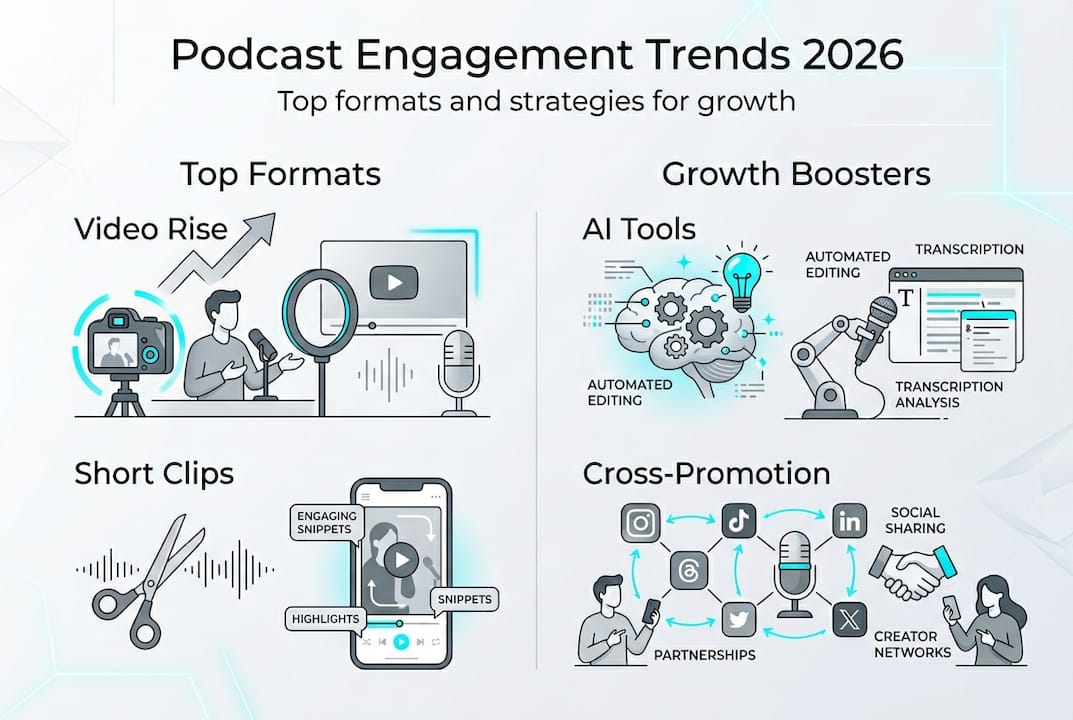
Video formats transformed podcast consumption in 2025. Video podcasts surged 70% growth on Spotify with 32-51% preferring video, depending on genre and platform. This shift reflects broader media consumption patterns where audiences expect visual engagement alongside audio.

Genre preferences reveal strategic opportunities. Comedy, society and culture, news, and true crime dominate video podcast consumption. These categories benefit from visual elements like facial expressions, guest interactions, and environmental context that pure audio cannot convey. Educational and interview-based shows also perform well when hosts use visual aids or screen sharing.
Top performing video podcast genres:
- Comedy: benefits from visual timing and guest chemistry
- Society and culture: leverages current events and visual storytelling
- News and politics: adds credibility through studio production
- True crime: enhances narrative with maps, photos, and reenactments
The video preference varies by listener demographics and consumption context. Younger audiences skew heavily toward video, while commuters and multitaskers prefer audio-only formats. Smart creators produce hybrid content: recording video for YouTube and social clips while maintaining audio-first distribution for traditional podcast platforms.
Pro Tip: Start with simple video setups using quality webcams and ring lights. Focus on content quality over production polish initially, then upgrade equipment as audience grows and revenue justifies investment.
Video integration affects your entire content workflow. Recording requires better lighting, framing, and visual presentation. Editing becomes more complex with multiple camera angles and graphics. Distribution expands beyond podcast apps to YouTube, TikTok, Instagram Reels, and LinkedIn video.
This format shift creates discovery advantages. YouTube’s algorithm surfaces podcast content to new audiences who never browse Apple Podcasts or Spotify. Short video clips from episodes generate social media engagement that drives listeners back to full episodes. The podcast launch strategies that succeed now incorporate video from day one.
However, video is not mandatory for all shows. Highly produced narrative podcasts, meditation content, and certain educational formats work better as pure audio experiences. Evaluate your genre, audience preferences, and production capabilities before committing to video.
Leveraging AI tools and short-form content to boost production and promotion
AI adoption accelerated among podcast creators in 2025. AI tools used by 25% of creators, with 58% willing to try, primarily for editing, transcription, and clip generation. These tools compress production timelines from days to hours, allowing creators to publish more frequently without sacrificing quality.
Common AI applications in podcast production:
- Automated transcription with speaker identification and timestamps
- Noise reduction and audio enhancement for cleaner sound
- Clip identification highlighting the most engaging moments
- Social media caption generation optimized for each platform
- Show notes and blog post creation from episode transcripts
Yet 16% of creators actively avoid AI, fearing it compromises authenticity. This tension reflects legitimate concerns about maintaining unique voice and personal connection with audiences. The solution lies in strategic AI use: automate tedious technical tasks while preserving creative control over content and presentation.
Short-form clips emerged as the dominant promotional strategy. Extracting 30-90 second segments from full episodes and distributing them across TikTok, Instagram, YouTube Shorts, and LinkedIn generates discovery at scale. These clips function as trailers, giving potential listeners a taste of your content and personality.
Pro Tip: Create clips featuring surprising statistics, controversial opinions, or emotional moments. These formats drive higher engagement and sharing compared to generic topic introductions or sponsor messages.
Effective clip strategies require understanding platform algorithms and audience behaviors. TikTok favors quick hooks and trending audio. LinkedIn rewards professional insights and data-driven content. Instagram balances entertainment with visual appeal. Tailor your clip selection and editing style to each platform’s unique culture.
“AI handles the mechanical work, freeing creators to focus on what machines cannot replicate: authentic storytelling, emotional connection, and unique perspectives. The best podcasts use AI as a production assistant, not a creative director.”
Balancing AI efficiency with human authenticity means using tools for transcription, initial edits, and clip suggestions, then manually refining everything before publication. Review AI-generated show notes for accuracy and tone. Adjust automated clips to ensure they represent your best moments, not just the loudest or longest segments.
Some creators worry about audio interface troubleshooting tips and technical barriers when adopting new tools. Start with user-friendly platforms that integrate multiple AI features in simple interfaces. As comfort grows, explore more advanced options offering greater customization and control.
Monetization strategies: diversifying revenue with sponsorships, memberships, and repurposing
Monetization evolved beyond simple sponsorship reads in 2025. Successful creators layer multiple revenue streams: dynamic ad insertion, host-read sponsorships, affiliate deals, membership programs, and repurposed content licensing. Host-read sponsorship CPM $18-50; memberships convert 2-5%; niche shows command higher CPM, creating opportunities for specialized content.
Sponsorship model comparison:
| Type | CPM Range | Pros | Cons |
|---|---|---|---|
| Dynamic insertion | $10-25 | Scalable, automated | Less authentic, lower engagement |
| Host-read ads | $18-50 | Trusted, high conversion | Time intensive, limited inventory |
| Affiliate deals | Variable | Performance-based upside | Requires audience trust, tracking complexity |
Dynamic ad insertion (DAI) allows automated sponsor placement in back catalog episodes, generating ongoing revenue from older content. However, these ads feel less personal and convert at lower rates than host-read sponsorships where you personally endorse products.
Host-read ads command premium rates because audiences trust creator recommendations. Your authentic endorsement carries more weight than generic ad copy. This format works best when you only promote products you genuinely use and believe in, maintaining credibility with listeners.
Affiliate partnerships offer unlimited earning potential tied directly to sales performance. Promote products naturally within episodes, provide unique discount codes, and earn commissions on purchases. This model aligns incentives: you succeed when you drive real value for sponsors and listeners.
Membership programs provide recurring revenue with 2-5% conversion rates typical for established shows. Offer exclusive content, early access, ad-free episodes, or community features. Platforms like Patreon, Supercast, and Apple Podcasts Subscriptions simplify setup and payment processing.
Key membership conversion factors:
- Clear value proposition differentiating free and paid tiers
- Consistent exclusive content delivery maintaining member satisfaction
- Community features fostering connection among supporters
- Pricing aligned with audience demographics and perceived value
Pro Tip: Start memberships after establishing consistent publishing and audience loyalty. Launch with 50-100 episodes demonstrating commitment and quality, then introduce paid tiers highlighting exclusive benefits.
Repurposing content multiplies monetization opportunities. Transform episodes into blog posts, YouTube videos, social clips, email newsletters, and even paid courses or books. Each format reaches different audience segments and creates additional sponsorship inventory.
Niche and educational podcasts typically earn higher CPM rates because they attract targeted audiences valuable to specific advertisers. A podcast about enterprise software reaches decision-makers with large budgets. A show covering sustainable investing attracts affluent, values-driven listeners. Identify your niche’s commercial value and pitch sponsors accordingly.
The podcast monetization guide and making money with podcasts resources provide detailed frameworks for implementing these strategies at different growth stages.
Enhance your podcast marketing and monetization with Prodcast
Staying competitive in 2025’s crowded podcast market requires tools that surface insights and streamline production. Prodcast analyzes thousands of podcast transcripts to identify trending products, key discussion moments, and expert insights across industries. This transforms spoken content into actionable data for both creators and marketers.

For podcast marketers, Prodcast reveals what audiences actually hear and care about. Discover which products fitness podcasters mention most frequently, what AI tools tech shows recommend, or which books business podcasts reference repeatedly. These insights inform sponsorship pitches, content strategy, and competitive positioning.
Creators use podcast moments clips to identify the most engaging segments from episodes, simplifying clip creation for social promotion. Instead of manually reviewing hours of content, let AI surface surprising statistics, controversial opinions, and emotional peaks that drive shares and discovery.
Explore featured products like mass persuasion and bmw hyundai subaru jeep to see how Prodcast tracks brand mentions and product trends across podcast conversations. This data-driven approach helps you understand what resonates with audiences and identify partnership opportunities aligned with listener interests.
FAQ
What are the key podcast content trends to watch beyond 2025?
Video podcasts will continue gaining popularity with deeper cross-platform integration between YouTube, TikTok, and traditional podcast apps. AI tools will evolve to handle more complex editing and personalization tasks, but must be balanced carefully to maintain authentic creator voice. Niche content targeting specific audience segments will outperform generic shows, as listeners seek specialized expertise and communities aligned with their interests. Interactive features like live recordings, audience Q&A, and choose-your-own-adventure narratives will emerge as differentiation strategies. Understanding podcast influencer marketing strategies positions you to capitalize on these shifts.
How can AI tools improve podcast production without losing authenticity?
AI aids production but 16% creators avoid it fearing loss of authenticity, recommending balanced approaches. Use AI for mechanical tasks like transcription, noise reduction, and initial clip identification, then manually refine everything before publication. This preserves your unique voice and creative control while eliminating tedious technical work. Review AI-generated show notes for tone and accuracy, ensuring they match your style. Select clips based on AI suggestions but edit them to highlight your best moments, not just the algorithm’s picks. The goal is using AI as a production assistant that amplifies your capabilities without replacing your creative judgment. Learn more about AI in podcasting applications.
What monetization strategies are most effective for niche podcasts?
Niche podcasts command higher CPMs and show better engagement for memberships (2-5% conversion) because they attract targeted audiences valuable to specific advertisers. Focus on direct sponsorships from companies serving your niche rather than generic ad networks. Your specialized audience delivers better ROI for relevant brands willing to pay premium rates. Membership programs work exceptionally well for niche shows because passionate communities value exclusive access and deeper connection. Offer specialized content like detailed tutorials, industry analysis, or expert interviews available only to members. Affiliate partnerships convert strongly when you promote niche-specific products your audience actively seeks. The podcast monetization guide details implementation strategies.
How do short-form clips drive podcast discovery and growth?
Short-form clips function as trailers distributed across TikTok, Instagram, YouTube Shorts, and LinkedIn, exposing your content to audiences who never browse podcast apps. Each clip showcases your personality, expertise, and content quality in 30-90 seconds, lowering barriers for new listeners. Platform algorithms favor video content, giving clips broader organic reach than traditional podcast promotion. Focus on surprising statistics, controversial opinions, or emotional moments that drive engagement and sharing. Include clear calls to action directing viewers to full episodes. Track which clips generate the most traffic to optimize future content selection. Consistent clip distribution builds cumulative discovery, with each video potentially reaching thousands of new potential listeners over time.
What download benchmarks indicate healthy podcast growth in 2026?
Median downloads of 516 per episode represent average performance, but healthy growth requires exceeding 25% year-over-year increase. Top 10% of shows achieve 2,500+ downloads per episode, while top 1% surpass 10,000. Focus on growth rate rather than absolute numbers, especially for newer shows. Consistent 30-40% quarterly growth indicates strong product-market fit and effective promotion. Track listener retention and completion rates alongside downloads, as engaged audiences matter more than vanity metrics. Compare your performance against similar shows in your niche and launch timeframe rather than established hits. Diversify success metrics to include email list growth, social media engagement, and monetization per listener, creating a holistic view of podcast health beyond download counts alone.