CATEGORIES
TAGS
Unlock podcast product discovery with data-driven strategies

Podcasts have evolved far beyond entertainment. They are powerful sources of consumer insights and product discovery that marketers and product managers can leverage to understand niche audiences deeply. With over 67% of the US population tuning into podcasts and 61% more likely to purchase after hearing ads, the medium offers unmatched opportunities for data-driven marketing. This article delivers actionable strategies grounded in research to help you harness podcast trends, refine product roadmaps, and engage your target audiences with precision. You will discover how branded podcasts, audience surveys, host-read ads, and niche podcast analysis can transform your approach to product discovery.
Table of Contents
- Key takeaways
- How branded podcasts transform product discovery
- Audience surveys and data-driven content iteration for niche engagement
- Podcast audience behavior and host-read ads impact on product discovery
- Niche podcast growth and product discovery case studies
- Explore podcast insights and leverage product discovery
- FAQ
Key Takeaways
| Point | Details |
|---|---|
| Branded podcasts as research | Branded podcasts function as ongoing market research that yields actionable consumer insights from listener interactions. |
| Episodes test messaging | Listener feedback from episodes helps refine product roadmaps and align offerings with real user needs. |
| Host read ads boost trust | Host read advertising increases trust and correlates with higher likelihood of product purchases. |
| Audience surveys drive iteration | Embedding surveys in episodes captures preferences and buying triggers while enabling rapid iteration. |
| Niche podcasts outperform broad content | Niche podcast audiences show stronger growth and engagement than broad content, supporting targeted marketing and product discovery. |
How branded podcasts transform product discovery
Branded podcasts are not just marketing tools. They function as continuous market research platforms that extract actionable consumer insights directly from listener interactions. Unlike traditional surveys that capture a single snapshot, branded podcasts create ongoing feedback loops through interviews, listener questions, and episode-specific responses. This dynamic approach allows you to understand how your audience thinks, what problems they face, and which product features resonate most.
When you produce a branded podcast, every episode becomes an opportunity to test messaging, gather qualitative data, and refine your product roadmap. Listeners share their experiences in real time, often revealing unmet needs or unexpected use cases that traditional research methods miss. You can then feed these insights directly into product development, sales training, and marketing for podcasts campaigns to create tighter alignment between what you build and what your audience wants.
The benefits over traditional research are substantial. Branded podcasts engage niche audiences in relaxed, conversational environments where they feel comfortable sharing honest opinions. This authenticity yields richer data than formal surveys or focus groups. You also build trust and authority simultaneously, positioning your brand as a thought leader while collecting intelligence that informs strategic decisions.
Pro Tip: Integrate a structured feedback mechanism into your podcast episodes, such as a dedicated email address or survey link mentioned at the end of each show. Review listener responses weekly and categorize insights by theme to identify patterns that warrant product iteration or messaging adjustments.
Audience surveys and data-driven content iteration for niche engagement
Audience surveys conducted through podcasts reveal critical listener preferences and behaviors that traditional channels often overlook. These surveys capture brand perceptions, content preferences, and purchasing triggers in contexts where listeners are already engaged and attentive. By embedding survey prompts within episodes, you reach audiences at their most receptive moments, leading to higher response rates and more accurate data.
To design effective podcast audience surveys, follow these steps:
- Define clear objectives tied to specific product or marketing questions you need answered.
- Keep surveys short, ideally under five questions, to maximize completion rates.
- Use conversational language that mirrors your podcast tone to maintain engagement.
- Offer incentives such as exclusive content or early product access to boost participation.
- Analyze results within 48 hours and share key findings with your team to enable rapid iteration.
Once you collect survey data, use it to pivot or optimize your product messaging. For example, if listeners consistently mention a specific pain point your product addresses, emphasize that benefit in future episodes and marketing materials. If survey responses reveal confusion about a feature, create targeted content that clarifies its value proposition. This iterative approach keeps your data-driven marketing strategy aligned with real audience needs rather than assumptions.
Engaging niche audiences effectively requires understanding their unique motivations and consumption habits. Podcast surveys let you segment listeners by interests, behaviors, and purchase intent, enabling hyper-targeted campaigns. You can also identify which topics generate the most excitement and double down on those themes to deepen engagement.
Pro Tip: Time your surveys immediately after episodes that discuss new product features or industry trends. Listeners are most motivated to share feedback when content is fresh in their minds, and you will capture more nuanced insights about their reactions and questions.
Podcast audience behavior and host-read ads impact on product discovery
Understanding podcast audience behavior is essential for leveraging the medium effectively. In the US, 67% of the population has listened to podcasts, and these listeners are highly engaged. They consume content primarily at home, during commutes, and while exercising, creating intimate listening environments where attention levels are high. This contrasts sharply with other digital channels where distractions and ad fatigue dominate.

Podcast listeners are also more likely to act on what they hear. Research shows that 61% are more likely to purchase products after exposure to podcast ads. This purchase likelihood stems from the trust listeners place in podcast hosts, who often serve as credible authorities in their niches. When hosts personally endorse products, their recommendations carry weight that traditional display or social ads cannot match.
Host-read ads dominate podcast inventory and attention share. These ads account for a significant portion of podcast advertising and drive 81% of ad attention, far outperforming pre-recorded spots. The conversational, authentic tone of host-read ads makes them feel less like interruptions and more like trusted recommendations, which is why they yield higher ROI for brands investing in podcast advertising effectiveness.
“Podcast listeners are 61% more likely to buy after ad exposure, with host-read ads capturing 81% of attention share and driving measurably higher purchase intent than other ad formats.”
For marketers and product managers, this data underscores the strategic value of podcast advertising. By partnering with hosts whose audiences align with your target demographics, you can tap into pre-existing trust and influence purchasing decisions at scale. The key is selecting shows where your product naturally fits the conversation and where the host genuinely believes in what they are promoting.
Niche podcast growth and product discovery case studies
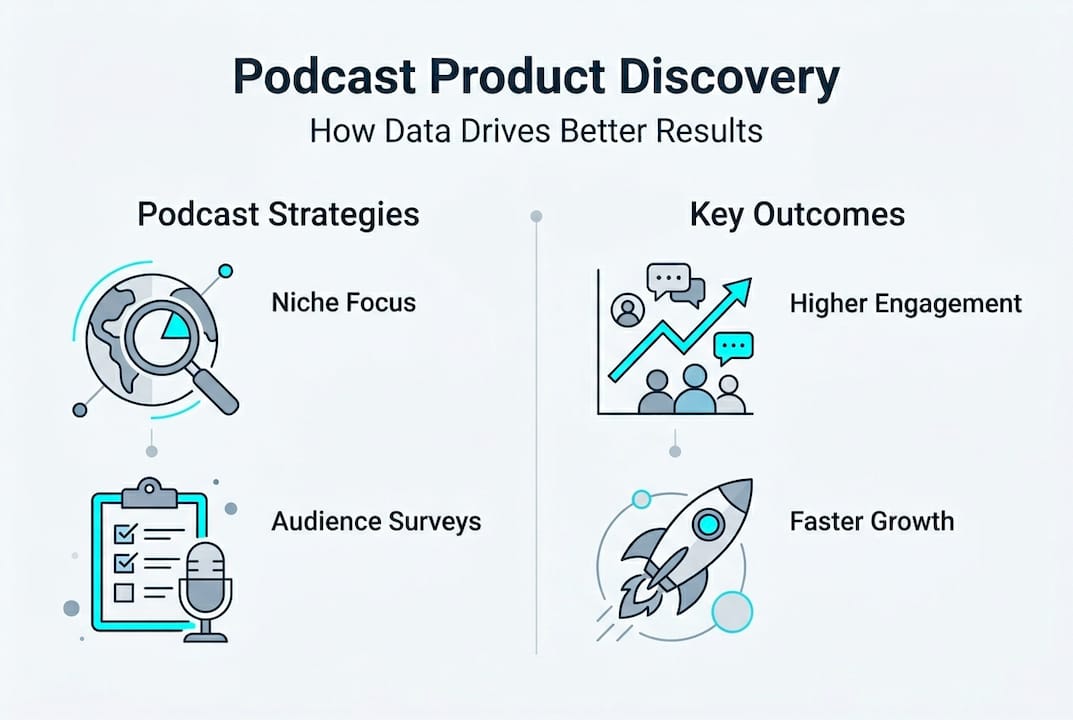
Niche podcasts consistently outperform broad podcasts in growth and engagement metrics. Data shows that niche podcasts grow 5:1 compared to general interest shows, driven by highly motivated audiences seeking specialized content. These listeners are more likely to engage deeply with episodes, share recommendations, and act on product mentions because the content speaks directly to their interests and needs.
| Podcast Type | Growth Rate | Engagement Level | Audience Loyalty |
|---|---|---|---|
| Niche | 5x | High | Very High |
| Broad | 1x | Moderate | Moderate |
| Hybrid | 2-3x | Moderate-High | High |
A compelling case study comes from Graza, an olive oil brand that leveraged podcast ads to drive retail sales. Their campaign targeted food and lifestyle podcasts with highly engaged niche audiences. The results were striking: a 15% retail lift and triple the incremental sales compared to baseline projections. This success demonstrates how strategic podcast placement can translate audio engagement into measurable commercial outcomes.
Key tactics for replicating this success include:
- Identify podcasts where your product category is already a topic of conversation, ensuring natural fit and audience interest.
- Prioritize shows with download numbers that meet industry benchmarks for your niche, typically 500 to 5,000 downloads per episode depending on category.
- Negotiate host-read ad placements rather than pre-recorded spots to maximize authenticity and trust.
- Track attribution through unique promo codes or custom landing pages to measure direct impact on sales and refine targeting.
For marketers and product managers, the lesson is clear. Niche podcasts offer concentrated access to audiences predisposed to care about your product. By aligning your podcast programmatic advertising strategy with shows that serve these audiences, you can achieve outsized returns on investment and accelerate product discovery.
Pro Tip: When selecting podcast niches, analyze listener demographics and psychographics to ensure alignment with your ideal customer profile. Use tools that track product mentions and trending topics within specific podcast categories to identify emerging opportunities before competitors saturate the space.
Explore podcast insights and leverage product discovery
Prodcast offers tools designed specifically for marketers and product managers who want to extract maximum value from podcast content. Our Moments tool helps you discover impactful podcast clips where products are mentioned, discussed, or recommended by trusted hosts. This allows you to identify trending products, understand consumer sentiment, and spot emerging opportunities in real time.

Explore featured podcast products like Mass Persuasion, which highlights persuasion techniques and tools discussed across business and marketing podcasts. Or dive into automotive insights with our BMW Hyundai Subaru Jeep product page, where you can track mentions and trends in automotive podcasts. These resources help you integrate podcast insights directly into your marketing and product strategies, turning audio conversations into actionable intelligence.
FAQ
What is podcast product discovery and why does it matter?
Podcast product discovery uses podcast content and ads to identify consumer trends and products that audiences are hearing about and caring about. It matters because podcasts provide a data-rich method for understanding what real people discuss, recommend, and purchase, helping you refine marketing and product strategies with insights grounded in authentic conversations.
How do branded podcasts provide continuous market research?
Branded podcasts provide continuous market research through listener interactions, interviews, and surveys embedded within episodes. Unlike traditional one-way surveys, they create ongoing feedback loops where audiences share experiences and preferences in real time, yielding richer qualitative data that informs product development and messaging.
What role do host-read ads play in podcast-driven product discovery?
Host-read ads build trust because listeners view hosts as credible authorities, which increases ad attention and purchase likelihood. These ads drive 81% of podcast ad attention and yield higher ROI than pre-recorded spots, making them essential for effective product discovery and conversion.
How can marketers choose the right podcasts to analyze for product insights?
Marketers should focus on niche podcasts with high engagement and audiences that align with their target demographics. Use download benchmarks, listener data, and tools that track product mentions to evaluate potential shows, ensuring you invest in podcasts where your product category is already part of the conversation. Learn more about choosing podcasts for product insights.